Safe Socials
Learn about what is available for schools, parents and students to support safe and positive online experiences for children and young people.
On this page
- School culture and environment
- School leadership and commitment
- Professional learning strategy
- Teaching and learning
- Families and communities (including information for parents/carers and students)
- Support for staff to respond to online incidents
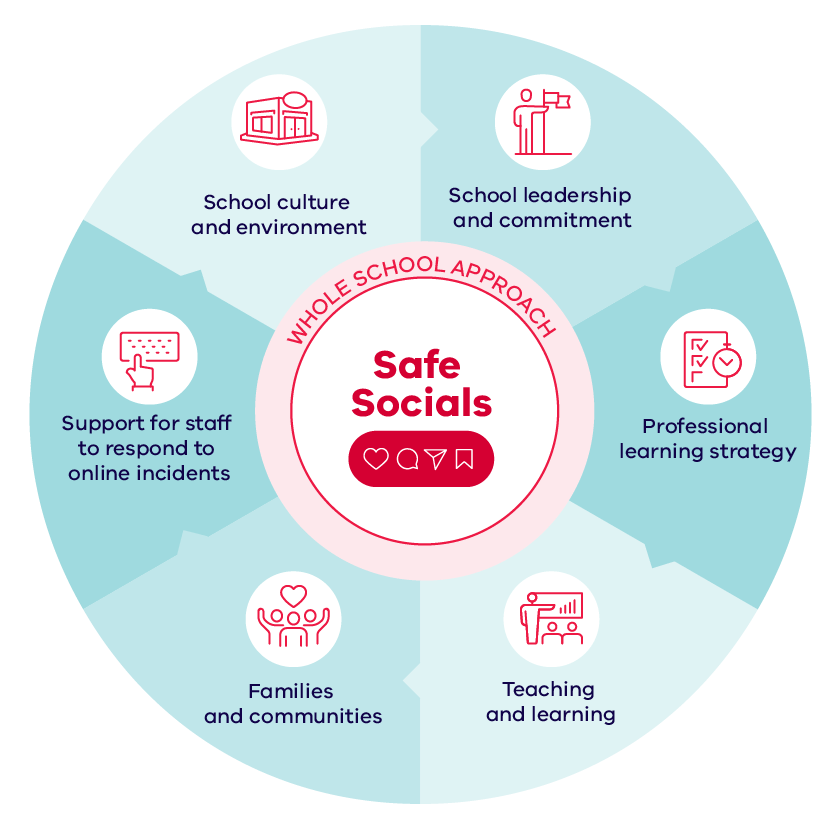
School culture and environment
School policies, procedures and culture enable students to be safe online
- Child Safe Standards – Policy, guidance and resources for schools to implement the Child Safe Standards.
- Digital Technologies-Responsible Use – Policy, guidance and resources for schools to support the responsible use of digital technologies.
- Digital Learning policy including Acceptable Use Agreements – Policy, guidance and resources for schools to support digital learning.
- Mobile phone ban – Policy, guidance and resources for schools to implement the mobile phone ban.
School leadership and commitment
Leaders drive school wide commitment to supporting students to be safe online

- Child Safe Standards – Policy, guidance and resources for schools to implement the Child Safe Standards.
- Respectful Relationships – Embeds a culture of respect and equality for school communities, including online.
- Alannah and Madeline Foundation – eSmart Schools is a free program for Victorian schools. It builds a culture of safe and responsible technology use. eSmart Advisors can help identify needs and provide support to encourage school-wide positive use of digital technology.
- eSafety’s Toolkit for Schools – Designed to support schools to create safer online environments.
Professional learning strategy
Teachers have the skills to deliver curriculum and respond to disclosures

- Respectful Relationships professional learning – Supports teachers to deliver social and emotional learning and respectful relationships education.
- Alannah and Madeline Foundation’s eSmart Schools Professional Learning and Resource Hub – Free resources for educators to support students to be positive digital citizens.
- eSafety Commissioner professional Learning for teachers – Free for educators and others working with children and young people in schools.
Teaching and learning
Students have the skills, knowledge and attitudes to be safe online
- Digital technologies subject area – Students learn to become creative and responsible users of technology. They learn how to solve problems, design digital solutions, manage data and work together in a safe and ethical way.
- Digital literacy foundational skill as part of Victorian Curriculum F-10 2.0 – Embeds key skills across the curriculum on how to use digital technologies effectively and manage safety and wellbeing online.
- Respectful Relationships teaching and learning resources – Embeds a culture of respect and equality across the entire school community, including online.
- eSafety Commissioner classroom resources – Resources with topics and content tailored for different education levels.
- ScrollSafe for teachers fact sheet – tips to support teachers of secondary-aged students to have conversations about social media and the online world in the classroom.
- ScrollSafe for teachers classroom activity – support secondary-aged students to build skills to manage online safety, digital identity and digital wellbeing.
Families and communities (including information for parents/carers and students)
School community has support and guidance to support students to be safe online
- Safe Socials fact sheet – for secondary students – Resource guides for secondary students to support safe and positive online experiences.
- Safe Socials fact sheet – parents/carers of secondary students – helpful tips for having positive and safe online experiences for parents/carers of secondary students.
- Safe socials fact sheet – parents/carers of primary students – helpful tips for having positive and safe online experiences for parents/carers of primary students.
- Social media age restrictions – eSafety Commissioner – information about the upcoming social media age restrictions, including what it means for young people, and how parents and carers can help.
- ScrollSafe parents/carers hub – advice to help parents talk with their teenage child about social media, online life and mental health.
- ScrollSafe for teens – quick and practical resources so you can take charge of your digital habits and online wellbeing:
- ScrollSafe 10 tips to stay smart online
- ScrollSafe TL;DR
- ScrollSafe digital wellbeing plan template.
Support for staff to respond to online incidents
Schools are equipped to respond to online incidents with appropriate steps, supports and referrals
- Bully Stoppers step by step guide for responding to online incidents affecting students – Steps for schools to take when an online incident occurs that affects students.
- eSafety Commissioner’s report online harm portal – Report a complaint about cyberbullying, image-based abuse or illegal and restricted online content.
- Mental Health Fund and Menu – Supports Victorian Government schools to select programs, staff and other support from an evidence-based menu to best meet their students’ mental health and wellbeing needs.
Updated 27 March 2026
About the VIC Government
- The Premier and ministers
- Find a Vic Gov department, agency or service
- Strategies and policies
- Inquiries and royal commissions
Grants and programs
Jobs and careers
Arts, culture and heritage
Business and the workplace
- Mentally Healthy Workplaces Framework
- Portable Long Service Authority
- Victoria’s racing industry
- Workforce Inspectorate Victoria
- Liquor licensing, sale and supply
Communities
- Children
- First Peoples - State Relations
- Finding records
- Gender equality & women’s leadership
- LGBTIQA+ equality
- Multicultural communities
- Seniors Online
- Veterans support and commemoration
- Volunteering in Victoria
- Youth Central
Education and training
- Victorian Early Childhood Regulatory Authority
- Early childhood education – information for professionals
- Kinder: Best Start, Best Life
- Education – information for parents
- Schools.Vic - information for schools
- Education grants, programs, awards and events
- PROTECT
- TAFE, training and universities sector
- TAFE Victoria
- Victorian Skills Authority
- Apprenticeships Victoria
- Learn Local
Environment, water and energy
Finance and economy
Health and social support
- Family violence reform
- NDIS Worker Screening Check
- NDIS and disability services and support in Victoria
- Patient Review Panel
- Transforming Trauma Victoria
Housing and property
Law and justice
- Adoption
- Births, deaths and marriages
- Honorary justices
- Machete ban
- Safeguarding Victorians against terrorism
- Stolen Generations Reparations Package
- Victims of Crime
- Victorian Racing Tribunal
Safety and emergencies
- Emergency Recovery Victoria
- Victorian Emergency Relief and Recovery Foundation
- Emergency Recovery Resource Portal
- How well do you know fire
- Fire Services Reform
- Water safety
- Marine Search and Rescue
Science and technology
- Data sharing and open data
- Data.vic - discover and access Vic Gov open data
- Developer.Vic - portal for API developers
- Go.vic URL shortener
- Vic Gov IT project dashboard
- Victoria’s free public wi-fi network
- Cyber security in the Victorian Government
Sport and recreation
Traffic and transport
- Cameras Save Lives
- Transport Fines
- Getting Around
- Transport Planning
- Transport Future
- Climate Change and transport
- Future Directions For Transport
- Transport projects
- Ports and Freight
Working in the Victorian Government
- Single Digital Presence home
- Accommodation and Library Services
- Executive employment in the Victorian public sector
- Budget, procurement and funding
- Careers in the Victorian Government
- Council and Regulator Toolkit
- Guidelines for working in government
- Join a government network
- Standards and guidelines
- VicFleet CarPool
- Victorian Government style guide