Mathematics and numeracy at home
As your child’s first teacher, you play an important role in helping develop their numeracy skills from an early age.
On this page
- Strengthening number sense at home
- Printable resources
- The Mathscots
- Everyday maths animations
- Maths every day frieze
- Practical advice for parents, families and carers
Strengthening number sense at home
These videos show what number sense looks like in the classroom. They also give you simple tips to help your child build number sense at home.
The first video explains what the series is about. The next four videos each focus on an important early maths skill. Your child will learn these skills in their first years of school, from Foundation to Grade 2.
After each video, you will find tips you can use to practice the skills with your child at home.
You can watch the videos with closed captions (CC). Captions are available in Chinese (Simplified), Chinese (Traditional), Dari, Farsi, Greek and Vietnamese. The closed caption language can be adjusted in the CC/subtitles option in video settings.
Introduction
Watch this introductory video for an overview of the series. Once you’ve finished, watch the rest of the videos for activities you can try at home.
https://player.vimeo.com/video/1160040440?autoplay=0
Strengthening number sense at home - Introduction
Open all
- One-to-one correspondence with Aintree Primary School
https://player.vimeo.com/video/1160042038?autoplay=0
One-to-one correspondence with Aintree Primary School
Tips for supporting one-to-one correspondence at home
Thank you for watching the one-to-one correspondence video with the Victorian Mathematics Ambassadors, Pat and Em, and Aintree Primary School.
The following tips and information will support you to practice the advice in the video to strengthen your child’s number sense at home.
What is one-to-one correspondence?
One-to-one correspondence is matching one number to one object when counting. For example, counting people in a picture by pointing at and counting each person one at a time; ‘1… 2… 3…, there are 3 people’.
Practising this skill at home will help your child to understand that the last number spoken is the total number of objects in a group.
Tips
Here are some easy and fun ways to help your child develop their understanding of one-to-one correspondence.
At home
Dinner time
When setting the table for a meal, decide how many places need to be set. Touch and count each item together out as you are setting them out to make sure there are enough for everyone. Repeat the total.
Toys away
As you are tidying up toys, count each toy together as they are put away.
Counting from a page
Count objects on a page in a book, pointing to each object as your child counts.
At the supermarket
The big shop
Count like items one (for example, apples) at a time as they are put in the trolley. When you have finished counting ask, ‘how many do we have?’ If your child counts from the beginning again, let them finish and repeat the total; ‘that’s right, there are 5 apples’.
Checkout games
Ask your child to count the number of people in each checkout queue to decide which checkout has the smallest queue.
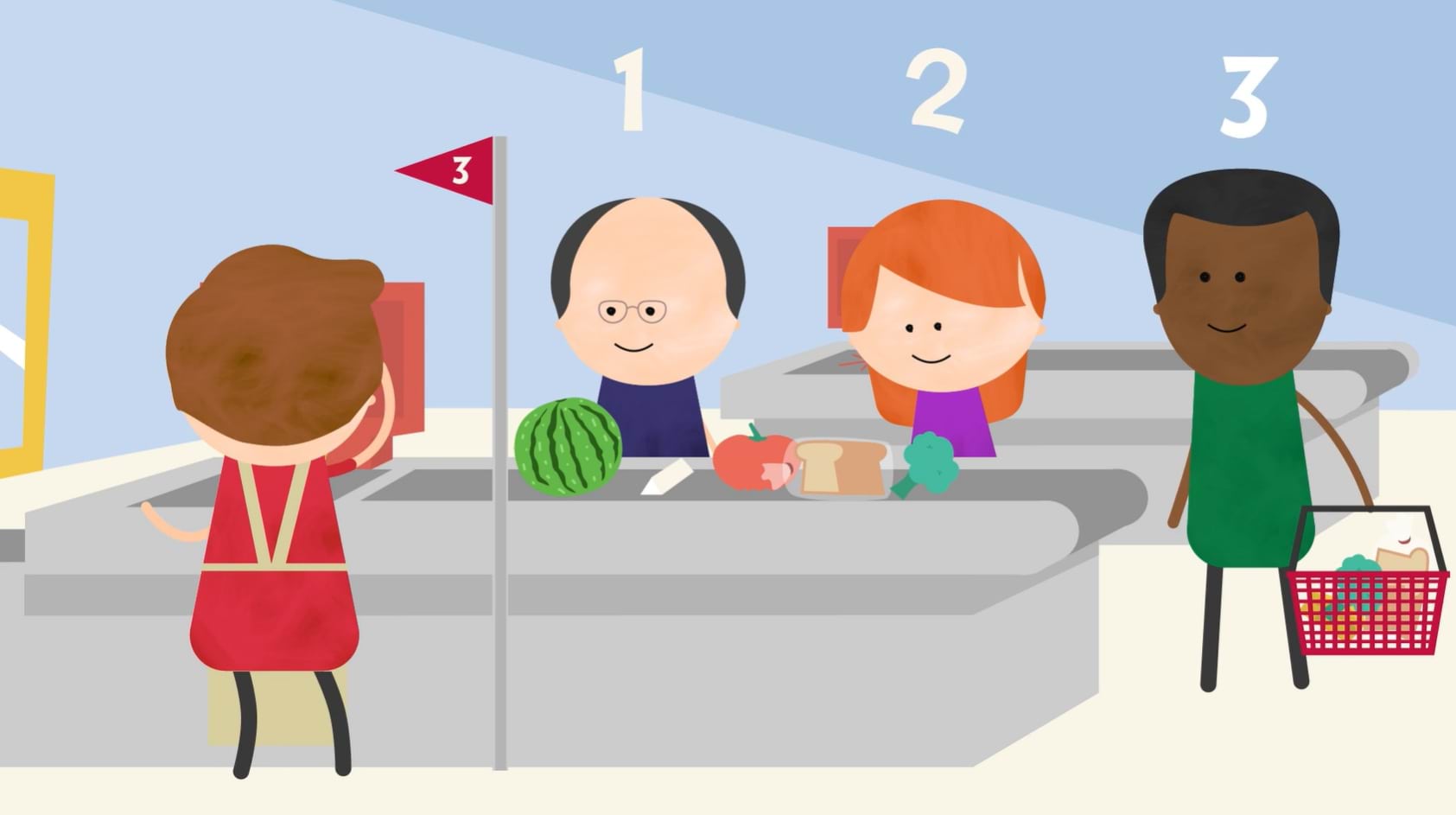
How many in the bag?
As you unpack a shopping bag, have your child count each item are they are taken out to be put away.
At the park
Nature numbers
When sitting under a tree at the park, ask your child to count the leaves you can see on the ground. Pick up each leaf one at a time, counting to 10, and then restarting. Once your child can do this without skipping any numbers, practice counting all the way up to 20.
The playground counts
Count similar parts of playground equipment. For example, the number of steps to the top of the slide, or the number of rungs on the monkey bars.
Watch and experiment
Watch Mathscots – Puppy jump photos(opens in a new window) to see the Mathscots use markers to measure how far they jump.
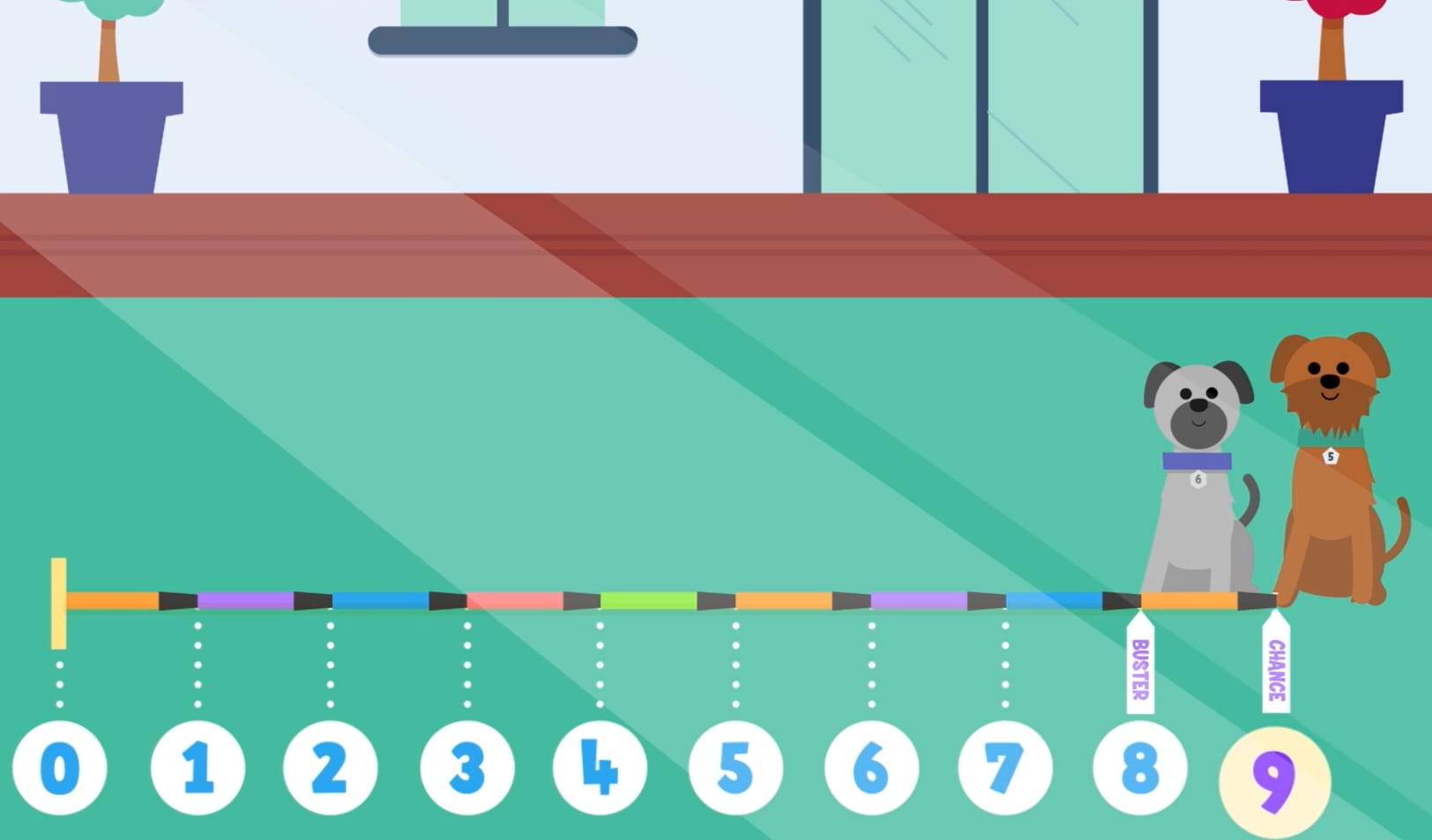
You can then try marking out equal spaces using chalk on the pavement or even leaves at the park. Then count with your child how many spaces everyone in your family can jump.
Further information
- For further information about the Victorian Mathematics Ambassadors, see: Victorian Mathematics Ambassadors.
- For further information on supporting your child’s education, see: Supporting your child’s education on the vic.gov.au website.
- Subitising with Tootgarook Primary School
https://player.vimeo.com/video/1160042612?autoplay=0
Subitising with Tootgarook Primary School
Thank you for watching the subitising video with the Victorian Mathematics Ambassadors, Pat and Em, and Tootgarook Primary School.
The following tips and information will support you to practice the advice in the video to strengthen your child’s number sense at home.
What is subitising?
Subitising is the ability to visually recognise how many objects are in a small group without counting. For example, knowing that someone is holding up 3 fingers without counting each finger.
Practising this skill at home will help your child to recognise small groups quickly without the need to count. Subitising usually works best with small numbers – up to 5, and sometimes up to 10.
Tips
Here are some easy and fun ways to help your child develop their understanding of subitising. Encourage your child to subitise first, then check by counting.
At home
Dice games
Roll a dice and have your child call out the number of dots as quickly as possible. Then count together to check. Roll again.
How many fingers?
When out walking, hold up 1-5 (or up to 10) fingers and thumbs for 1-2 seconds, and ask your child to tell you how many fingers they can see.
Snack peek
Place up to 5 pieces of snack food (for example, grapes, crackers) on a plate without your child seeing. Let your child look briefly, then cover it. Ask ‘how many did you see?’ Reveal the pieces and count together to check.
Plate patterns
Place up to 10 items on a plate, using familiar patterns. For example, 8 buttons could be arranged in 2 sets of 4 that use the pattern shown on standard dice. Let your child look for 3 seconds, then cover it. Ask ‘how many did you see’, or ‘how many altogether?’ Show the items again and count together to check.
Missing eggs
As you use eggs, show the egg carton to your child and give them 2 seconds to look at the number remaining without counting. Ask them, ‘how many eggs are left’ or how many have been used?’
At the supermarket
Bunches of bananas
Hold up a bunch of bananas for a few seconds and ask your child how many there were before counting. Count together afterwards to check if they were right.
Yoghurt tubs
Show your child a packet of yoghurt tubs quickly. Is it a pack of 2, 4, 6 or 12 yoghurts? Ask them, ‘would this be enough for everyone in our family?’
At the park
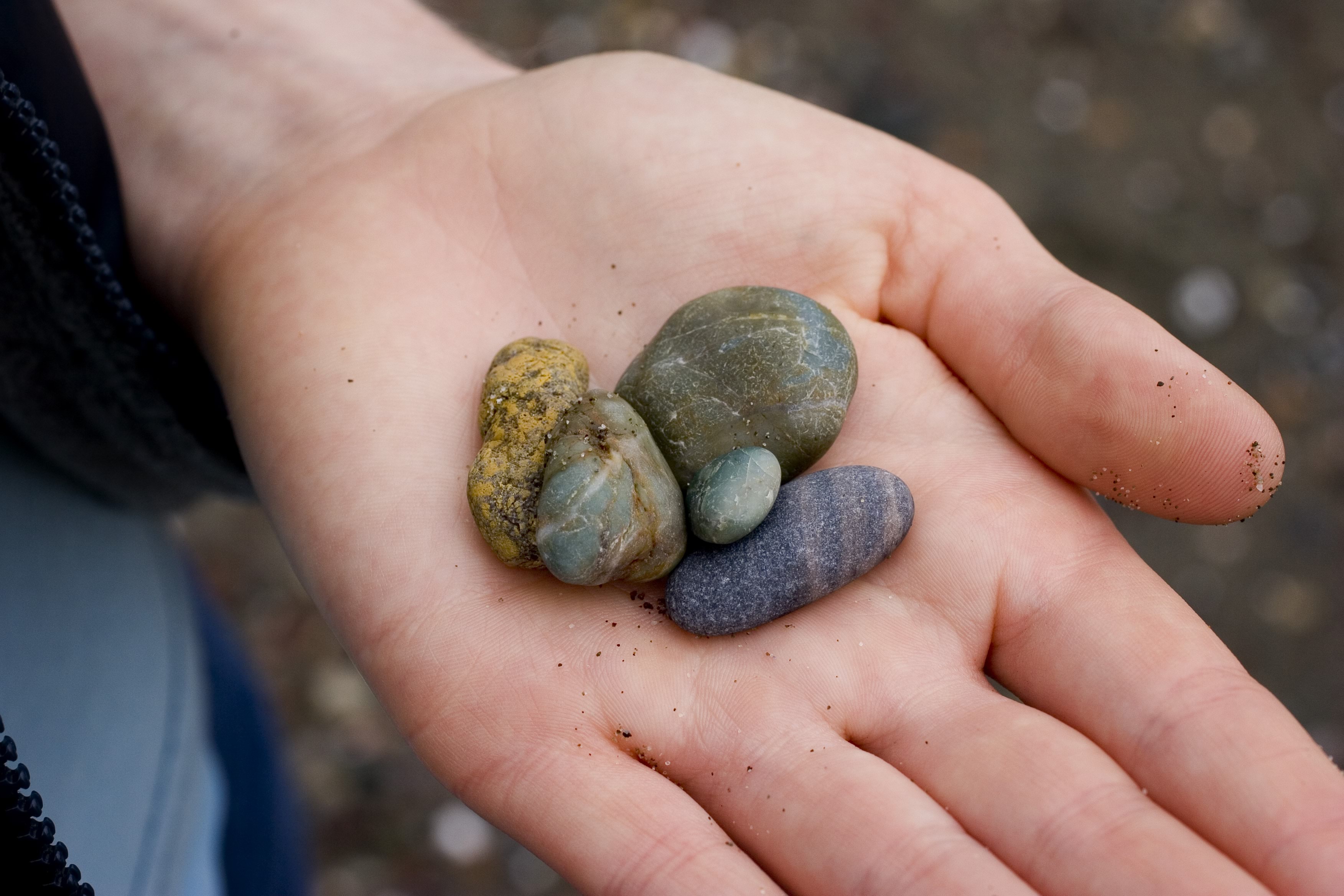
It’s a handful
Hide up to 5 small objects (for example, stones) in your hand. Open your hand briefly for 1-2 seconds then close it. Ask ‘how many did you see?’ Open your hand and count together to check.
Knock them down skittles
Watch Everyday maths - around the house to see how to set up a game of skittles using empty plastic bottle.
Play your own game of skittles and have your child call out how many bottles are left standing after round. They can show the number on their fingers too.
Further information
- For further information about the Victorian Mathematics Ambassadors, see: Victorian Mathematics Ambassadors.
- For further information on supporting your child’s education, see: Supporting your child’s education on the vic.gov.au website.
- Partitioning (part-part-whole) with Warringa Park School
https://player.vimeo.com/video/1160042962?autoplay=0
Partitioning (part-part-whole) with Warringa Park School
Thank you for watching the partitioning video with the Victorian Mathematics Ambassadors, Pat and Em, and Warringa Park School.
The following tips and information will support you to practice the advice in the video to strengthen your child’s number sense at home.
What is partitioning?
Partitioning is breaking a whole number, for example 7, into different parts, for example 3 and 4. Breaking this ‘whole’ number into 2 ‘parts’ is called part-part-whole.
Another example would be taking the ‘whole’ number 9 and breaking into 2 ‘parts’ of 6 and 3. In this example the number 9 could also be broken into ‘parts’ of 4 and 5, or 2 and 7 or 1 and 8.
Practising this skill at home will help your child understand that any number can be broken into different parts, which supports later learning in addition and subtraction.
Tips
Here are some easy and fun ways to help your child develop their understanding of partitioning.
At home
Toy sort
Count a collection of your child’s favourite toys, such as construction blocks. This total is the whole.
Ask your child to rearrange them into 2 groups (parts) and tell you how many are in each part.
Bring both parts back into one group and then separate into 2 parts in a different way. Ask them, ‘how many ways can the toys be grouped into 2 parts?’
Petal parts
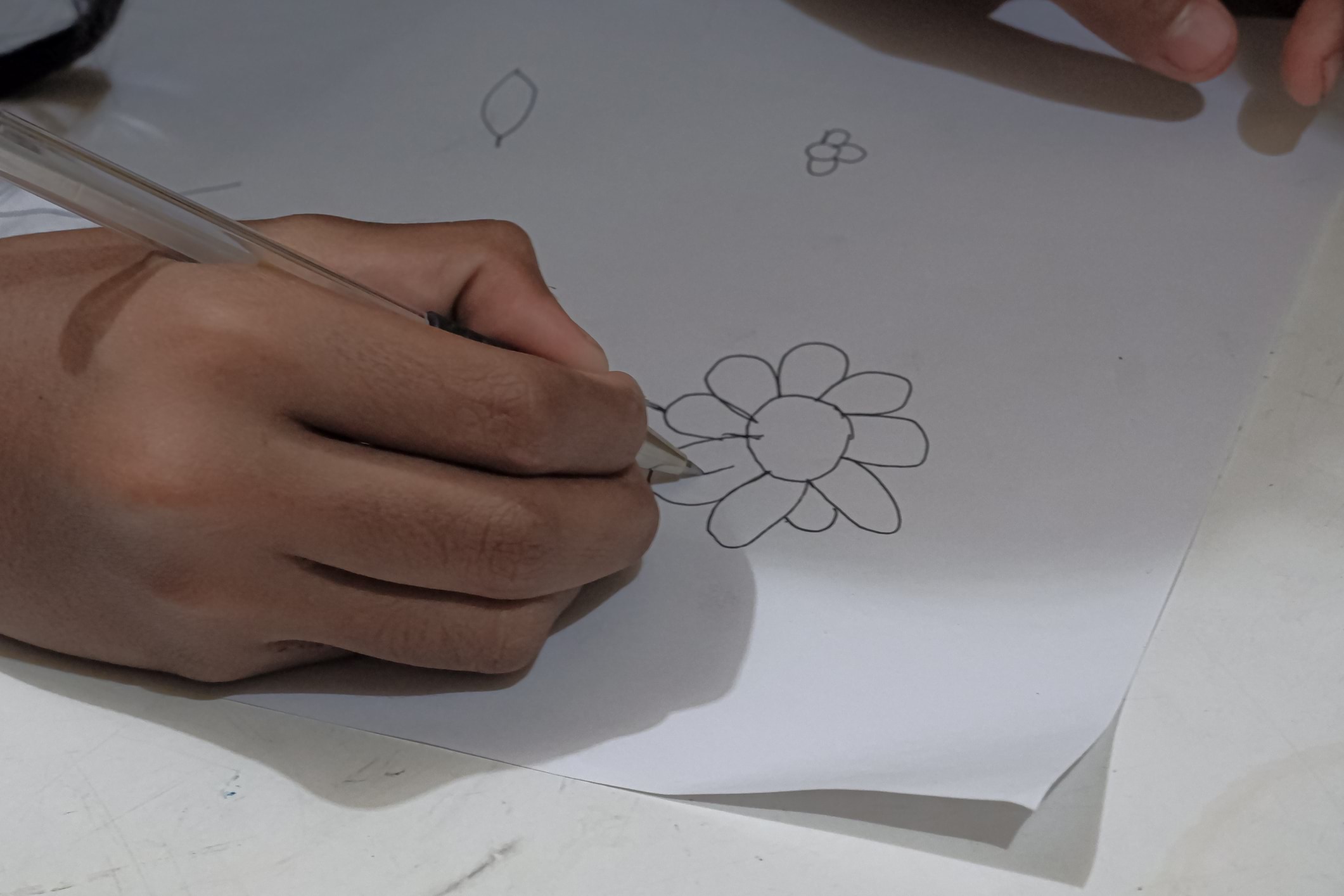
Draw a flower with 9 petals. Have your child count the petals (the whole).
Ask your child to colour in the petals of the flower using 2 different colours; for example, 4 red petals and 5 blue petals.
Draw a second flower with 9 petals. Ask your child to show you another way to colour the petals using the same 2 colours.
If you like, you can draw more flowers with 9 petals and see how many other ways your child can break 9 into 2 parts using the 2 colours.
You can also do this activity with flowers that have a different number of petals.
At the supermarket
Oranges and apples
Pick 7 pieces of your child’s 2 favourite fruits (for example, apples and oranges).
Have your child tell you the total number of fruit (the whole), as well as how many of each type of fruit (the parts) there are; for example, 3 oranges and 4 apples. Talk about what other combinations of the 2 fruit types would make 7.
Two packets
Select 2 packets of bread rolls and ask your child to count the number of rolls (the whole). How many are in each packet (the parts)?
At the park
Chalk and talk
Use chalk to draw a number (the whole) on the pavement.
Have your child draw that number of a favourite shape below the number. Ask them to circle a number smaller than the whole to make 2 parts; for example, draw 6 shapes and circle 4 shapes, leaving 2 shapes as the second part.
Nature numbers
Collect a small group of sticks, leaves, or stones from the park. Count the whole with your child and then ask them to sort into 2 parts. Count and then bring back together to separate a different way.

Jumping in parts
Ask your child to do 10 jumps in 2 parts. They might do 4 quick jumps for the first part, pause, and then do another 6 quick jumps for the second part. Ask, ‘how many jumps in each part’ or if there was another way they could jump in 2 parts.
Further information
- For further information about the Victorian Mathematics Ambassadors, see: Victorian Mathematics Ambassadors.
- For further information on supporting your child’s education, see: Supporting your child’s education on the vic.gov.au website.
- Teen Numbers with St Thomas the Apostle Catholic Primary School
https://player.vimeo.com/video/1160043234?autoplay=0
Teen Numbers with St Thomas the Apostle Catholic Primary School
Thank you for watching the teen numbers video with the Victorian Mathematics Ambassadors, Pat and Em, and St Thomas the Apostle Catholic Primary School.
The following tips and information will support you to practice the advice in the video to strengthen your child’s number sense at home.
What are teen numbers?
Teen numbers are numbers between 11-19. These numbers can be tricky to learn as they are different from 1-10 and do not follow the same naming patterns for 20 and above.
Learning the teen numbers and being able to count to 20 is an important skill for your child to learn. You can support your child to become confident with teen numbers by encouraging them to count to, and backwards from, 20.
Just like in the video, you and your child can use the prompt ‘10 and some more’ to describe the teen numbers.
Practising this skill at home will help your child feel confident counting to 20.
Tips
Here are some easy and fun ways to help your child develop their understanding of teen numbers.
At home
Count your eggs
When cooking eggs, take a carton of eggs and count the eggs together. Put 2 eggs on the bench and count the eggs remining in the carton, demonstrating that 12 is 10 and 2 more.
Block tower
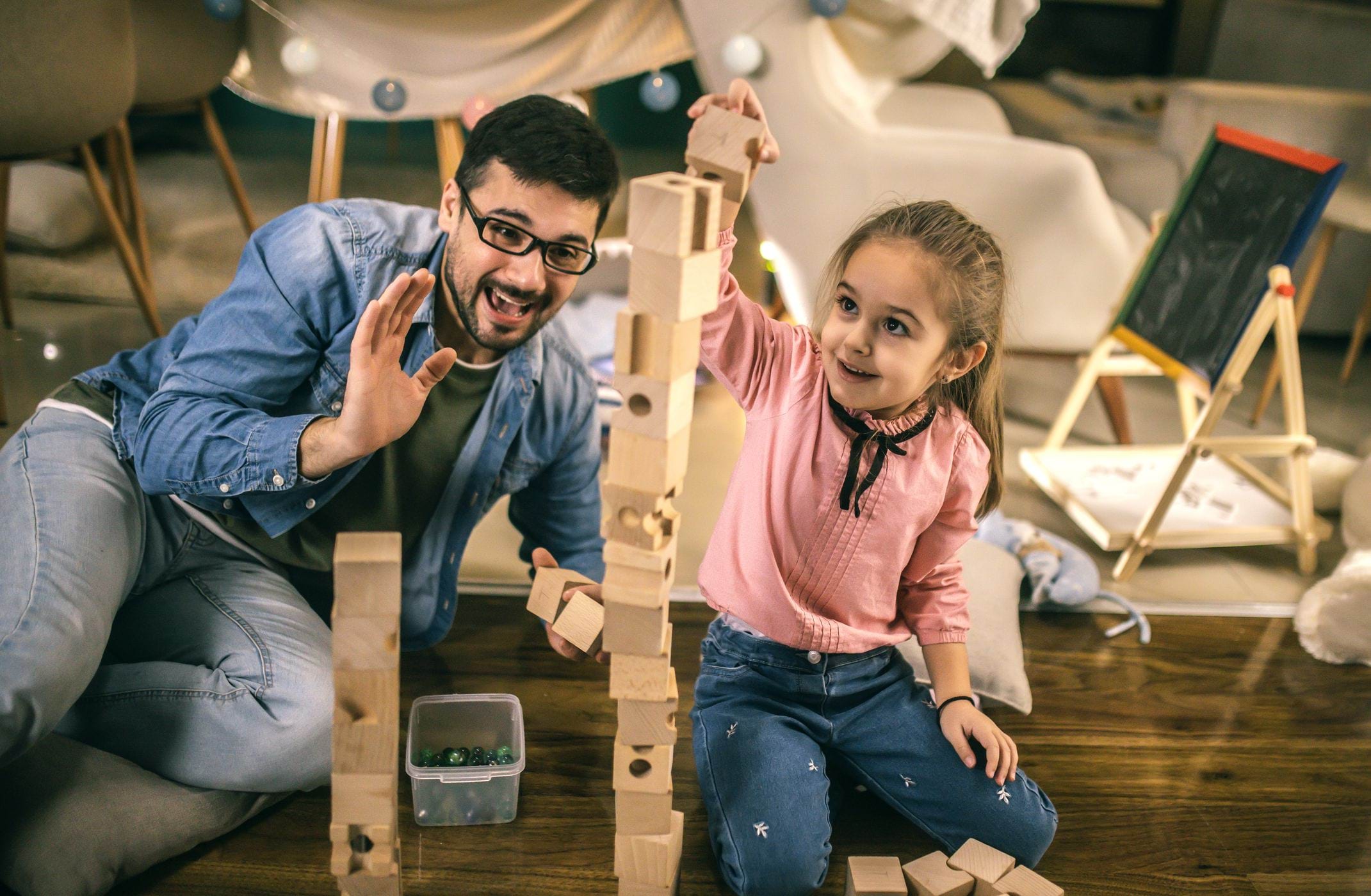
Build block towers of different heights using 11-19 blocks. Build the first 10 blocks quickly and then add on some more. For more practice counting teen numbers, recount the number of blocks in each tower at the end.
Ask your child how many more than 10 the number is. For example, ‘15 is 10 and how many more?’
If your child is unsure of the answer, count together to 10, pause and then say ’15 is 10 and 1, 2, 3, 4, 5 more’, pointing to each block greater than 10 as you count.
Just a handful
Take a handful of a healthy snack such as sultanas. Count how many there are. Ask them, ‘is it a teen number?’ Add or take away sultanas to make the snack a teen number. Ask your child to tell how many more than 10 the total is; for example, 13 is 10 and 3 more.
What’s missing?
Write the numbers 11-19 on scraps of paper and place in order. When your child is not looking, remove one of the numbers and remove the gap created. Have them to tell you which number is missing. Return the number and then take it in turns to find the missing number. Ask your child to describe the missing number as ‘10 and how many more?’
At the supermarket
Aisle attention
Look at the aisles of larger supermarkets. Ask your child to show you which aisles have teen numbers. What will the next aisle be? Have your child lead you to a teen aisle or tell you what is in the aisle.
Number hunt
Encourage your child to look for teen numbers at the supermarket. They might find teen numbers written in price tags, barcodes or signs. Can they find 10 teen numbers?
Checkout games
Ask your child to count each item as they are taken out of the trolley or basket. When they reach a teen number, ask them to describe the next number as ‘10 and how many’ more; for example, ‘11 is 10 and 1 more’.
At the park
Teen number hopscotch
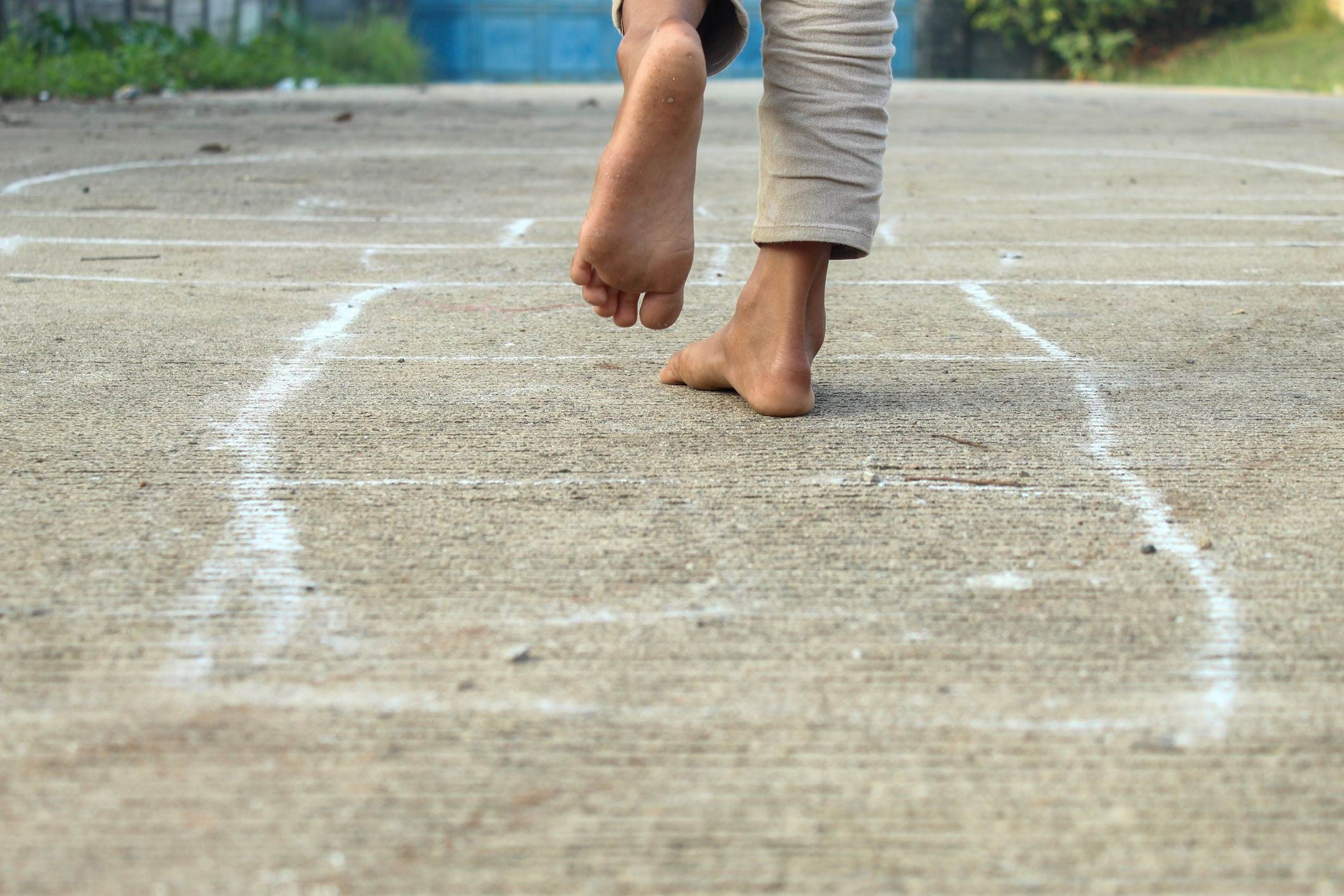
Play hopscotch with the numbers 11-20 instead of 1-10. Including 20 helps your child what comes after the teen numbers. Ask them to call out the number that the stone lands on before they hop through the course, counting each number.
Outdoor counts
Have your child find things at the park that can be counted (fence rails, trees). Tell them the goal is to find something that has a teen number as a total.
Sticks and stones
Collect natural items like sticks and stones. Use them to represent a teen number; for example, make 14 from 10 sticks and 4 stones. Ask your child, ‘how many more than 10 is the total?’.
Collect more items to build another teen number.
Further information
- For further information about the Victorian Mathematics Ambassadors, see: Victorian Mathematics Ambassadors.
- For further information on supporting your child’s education, see: Supporting your child’s education on the vic.gov.au website.
Printable resources
The following document can be used to print the Strengthening number sense at home tips:
Strengthening number sense at home Word 3.62 MB (opens in a new window)
Strengthening number sense at home PDF 808.88 KB (opens in a new window)
Strengthening number sense at home tips are also available as printable documents in Arabic, Chinese (Simple), Chinese (Traditional), Dari, Hindi, Malayalam, Persian, Punjabi, Urdu and Vietnamese.
Open all
- Arabic
Strengthening number sense at home (Arabic) Word 3.63 MB (opens in a new window)
Strengthening number sense at home (Arabic) PDF 939.94 KB (opens in a new window)
- Chinese (Simplified)
Strengthening number sense at home (Chinese - Simplified) Word 3.63 MB (opens in a new window)
Strengthening number sense at home (Chinese - Simplified) PDF 1015.39 KB (opens in a new window)
- Chinese (Traditional)
Strengthening number sense at home (Chinese - Traditional) Word 3.62 MB (opens in a new window)
Strengthening number sense at home (Chinese - Traditional) PDF 961.75 KB (opens in a new window)
- Dari
Strengthening number sense at home (Dari) Word 3.65 MB (opens in a new window)
Strengthening number sense at home (Dari) PDF 911.91 KB (opens in a new window)
- Farsi
Strengthening number sense at home (Farsi) Word 3.63 MB (opens in a new window)
Strengthening number sense at home (Farsi) PDF 909.66 KB (opens in a new window)
- Hindi
Strengthening number sense at home (Hindi) Word 3.63 MB (opens in a new window)
Strengthening number sense at home (Hindi) PDF 892.26 KB (opens in a new window)
- Malayalam
Strengthening number sense at home (Malayalam) Word 3.64 MB (opens in a new window)
Strengthening number sense at home (Malyalam) PDF 1003.33 KB (opens in a new window)
- Punjabi
Strengthening number sense at home (Punjabi) Word 3.63 MB (opens in a new window)
Strengthening number sense at home (Punjabi) PDF 879.46 KB (opens in a new window)
- Urdu
Strengthening number sense at home (Urdu) Word 3.63 MB (opens in a new window)
Strengthening number sense at home (Urdu) PDF 900.64 KB (opens in a new window)
- Vietnamese
Strengthening number sense at home (Vietnamese) Word 3.62 MB (opens in a new window)
Strengthening number sense at home (Vietnamese) PDF 891.09 KB (opens in a new window)
The Mathscots
The Mathscots is an animation series that supports numeracy at home for early primary school aged children.
Following the introductory episode, there are nine episodes that you can watch with your children in any order at any time. Each episode is between one and two minutes long.
For each episode, there are ideas and activities you can explore with your children. Whether you choose to explore a few activities or many, it’s important to:
- learn alongside your children
- encourage curiosity and discussion.
Everyday maths animations
These animations help you to engage your child in conversations about mathematics and numeracy in everyday activities.
- Watch animation: Around the House
- Watch animation: Outdoors
- Watch animation: At the supermarket
Everyday maths animations are also available with closed caption (CC) translations in Chinese (Simplified), Chinese (Traditional), Dari, Farsi, Greek and Vietnamese.
Open all
- Chinese (Simplified)
- Around the house(opens in a new window)
- Outdoors(opens in a new window)
- At the supermarket(opens in a new window)
- Chinese (Traditional)
- Around the house(opens in a new window)
- Outdoors(opens in a new window)
- At the supermarket(opens in a new window)
- Dari
- Around the house(opens in a new window)
- Outdoors(opens in a new window)
- At the supermarket(opens in a new window)
- Farsi
- Around the house(opens in a new window)
- Outdoors(opens in a new window)
- At the supermarket(opens in a new window)
- Greek
- Around the house(opens in a new window)
- Outdoors(opens in a new window)
- At the supermarket(opens in a new window)
- Vietnamese
- Around the house(opens in a new window)
- Outdoors(opens in a new window)
- At the supermarket(opens in a new window)
Maths every day frieze
A numeracy focused activity for each day of the week, including suggestions and questions to prompt conversations with young children.
Maths Everyday – Frieze PDF 633.99 KB (opens in a new window)
Practical advice for parents, families and carers
- How to build your child’s numeracy skills from birth to Year 2 – how to build your child’s skills in maths, measurement and patterns.
- How to build your child’s numeracy skills from Years 3 to 6 – how to build your child’s skills in maths and numeracy in everyday situations.
- Literacy and numeracy tips in your language – access the numeracy advice linked above in multiple languages. Available in Arabic, Chin Hakha, Dari, Hindi, Persian, Punjabi, Simplified Chinese, Urdu, Vietnamese. This resource also includes tips for supporting your child’s literacy skills.
- Supporting your child’s education – provides resources and programs for parents and carers to help support their child’s learning.
Updated 27 March 2026
About the VIC Government
- The Premier and ministers
- Find a Vic Gov department, agency or service
- Strategies and policies
- Inquiries and royal commissions
Grants and programs
Jobs and careers
Arts, culture and heritage
Business and the workplace
- Mentally Healthy Workplaces Framework
- Portable Long Service Authority
- Victoria’s racing industry
- Workforce Inspectorate Victoria
- Liquor licensing, sale and supply
Communities
- Children
- First Peoples - State Relations
- Finding records
- Gender equality & women’s leadership
- LGBTIQA+ equality
- Multicultural communities
- Seniors Online
- Veterans support and commemoration
- Volunteering in Victoria
- Youth Central
Education and training
- Victorian Early Childhood Regulatory Authority
- Early childhood education – information for professionals
- Kinder: Best Start, Best Life
- Education – information for parents
- Schools.Vic - information for schools
- Education grants, programs, awards and events
- PROTECT
- TAFE, training and universities sector
- TAFE Victoria
- Victorian Skills Authority
- Apprenticeships Victoria
- Learn Local
Environment, water and energy
Finance and economy
Health and social support
- Family violence reform
- NDIS Worker Screening Check
- NDIS and disability services and support in Victoria
- Patient Review Panel
- Transforming Trauma Victoria
Housing and property
Law and justice
- Adoption
- Births, deaths and marriages
- Honorary justices
- Machete ban
- Safeguarding Victorians against terrorism
- Stolen Generations Reparations Package
- Victims of Crime
- Victorian Racing Tribunal
Safety and emergencies
- Emergency Recovery Victoria
- Victorian Emergency Relief and Recovery Foundation
- Emergency Recovery Resource Portal
- How well do you know fire
- Fire Services Reform
- Water safety
- Marine Search and Rescue
Science and technology
- Data sharing and open data
- Data.vic - discover and access Vic Gov open data
- Developer.Vic - portal for API developers
- Go.vic URL shortener
- Vic Gov IT project dashboard
- Victoria’s free public wi-fi network
- Cyber security in the Victorian Government
Sport and recreation
Traffic and transport
- Cameras Save Lives
- Transport Fines
- Getting Around
- Transport Planning
- Transport Future
- Climate Change and transport
- Future Directions For Transport
- Transport projects
- Ports and Freight
Working in the Victorian Government
- Single Digital Presence home
- Accommodation and Library Services
- Executive employment in the Victorian public sector
- Budget, procurement and funding
- Careers in the Victorian Government
- Council and Regulator Toolkit
- Guidelines for working in government
- Join a government network
- Standards and guidelines
- VicFleet CarPool
- Victorian Government style guide