Become an early childhood teacher or educator
Thinking about a career in early childhood? Learn how to get started and explore the scholarships, financial support and job opportunities available.
On this page
- The best start for your career
- Scholarships
- Study and career pathways
- What do kinder teachers and educators do?
- Where can I work in early childhood education?
- How to become an early childhood teacher (or kindergarten teacher)
- Study support through partnerships
- How to become an early childhood educator
The best start for your career
If you’ve always wanted a career where you can shape young minds, now’s your time to make a difference.
We’re offering generous financial support for you to get qualified in early childhood education or to upskill. That means you can earn while you learn and get the best start for your career.
Our approach, designed in collaboration with the early childhood and tertiary education sectors, includes:
- opportunities for people to become teachers and educators through the Early Childhood Tertiary Partnerships program
- Free TAFE to enrol in the Certificate III or Diploma of Early Childhood Education and Care
- scholarships to support you while you study to become an early childhood teacher or to upskill to be a Diploma-qualified educator.
Once you’ve finished studying, you can also be supported with employment incentives and relocation support.
How we’ll support your career
Professional development and career information for current early childhood professionals.
Molly’s experience as an early childhood teacher
https://player.vimeo.com/video/894748287?autoplay=0
Scholarships
Financial support is available while you study to become an early childhood teacher or educator.
Whether you’re just starting your study or are upskilling, to become an early childhood teacher or educator, there may be a scholarship to help you on your way. Scholarship funding can help with:
- living costs while you study, especially while on placement
- other essential expenses related to your education.
The Early Childhood Scholarships Program offers financial support of up to $25,000 (before tax) for early childhood teaching qualifications and up to $7,000 (before tax) for educators upskilling to a Diploma of Early Childhood Education and Care.
The Early Childhood Aboriginal Pathways Scholarships Program offers Aboriginal and Torres Strait Islander people financial support of up to $34,000 (before tax) to become an early childhood teacher or educator.
Study and career pathways
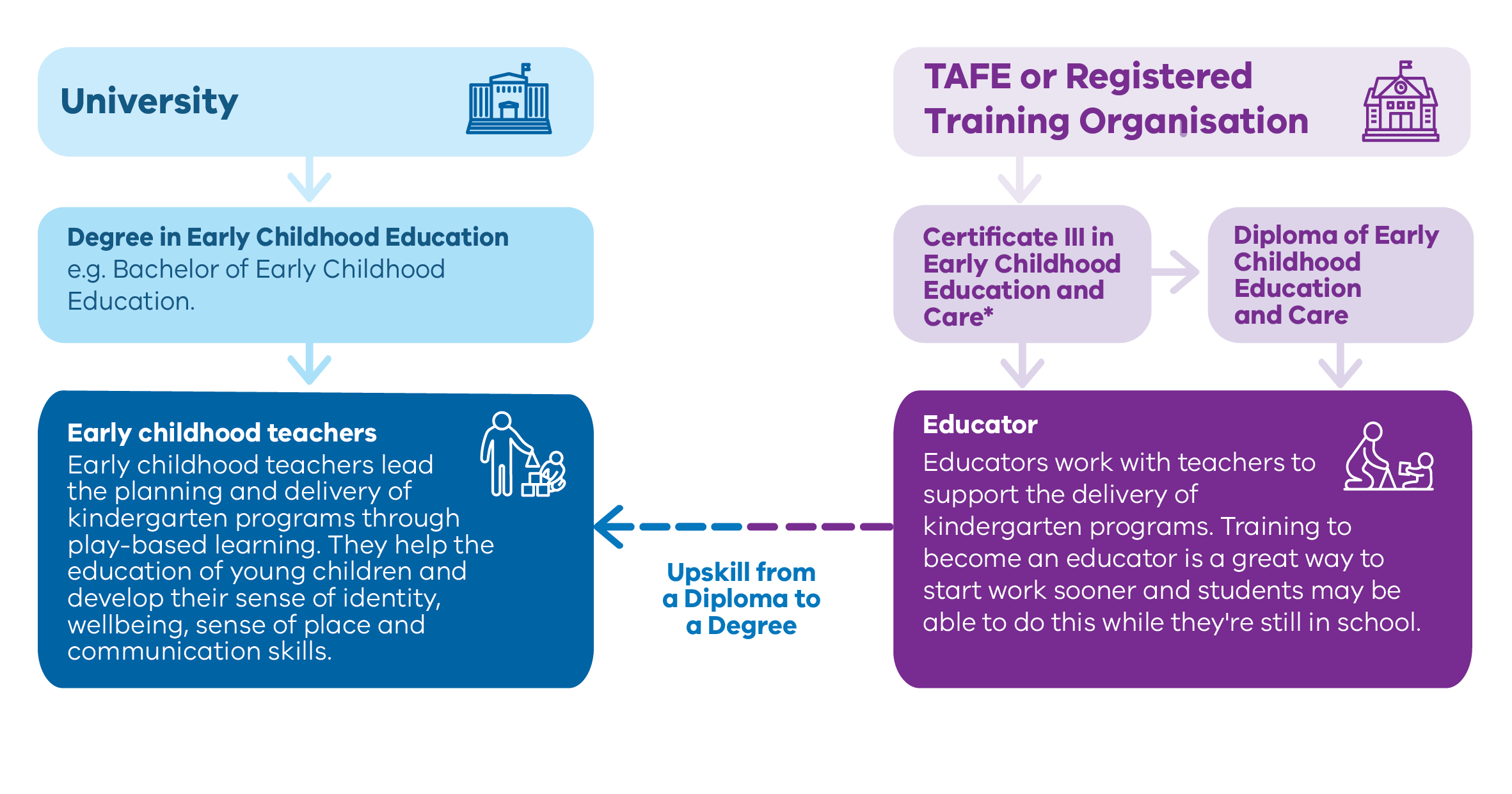
So, you’re interested in a career in early childhood education? Here’s a quick overview of the ways to become an early childhood teacher or educator.
Early childhood pathways infographic
Looking for early childhood education courses?
Find accredited in-person and online courses with our interactive map.
What do kinder teachers and educators do?
Early childhood teachers and educators work with young children in the years before they start primary school.
As a kindergarten teacher, you will work with educators and other health and wellbeing professionals to design and lead a play-based learning program for young children to support their development.
As an educator, you will work with teachers to deliver the play-based learning program for children.
Quality, play-based learning can be life-changing for children’s learning and development, including:
- physical health and wellbeing
- social competence
- emotional maturity
- language and cognitive skills (school-based)
- communication skills
- general knowledge.
You’ll have a lasting impact on the lives of hundreds of young children and their families.
Where can I work in early childhood education?
Early childhood education takes place through quality kindergarten programs across Victoria - at standalone kindergartens or in long daycare centres.
With so many opportunities available, you’ll be able to work anywhere in the state in a range of settings, including those run by:
- community organisations, targeting cohorts such as First Nations communities, economically disadvantaged groups and rural communities
- independent schools or government schools
- local councils
- a committee of volunteer parents
- private businesses.
Hear from early childhood teachers about their experiences
https://player.vimeo.com/video/362182210?autoplay=0
How to become an early childhood teacher (or kindergarten teacher)
To become an early childhood teacher, you need a degree in early childhood education. You have multiple pathways to choose from, depending on your current qualifications and experience:
- Bachelor’s degree: You can study an undergraduate early childhood qualification, like a Bachelor in Early Childhood Education. If you study full-time, this usually takes around 3 or 4 years to complete.
- Postgraduate pathway: If you have prior university qualifications, then a master’s in early childhood education may be the best pathway for you. If you study full-time, this usually takes 2 years to complete.
- Upskilling as an educator: If you’re already working as an educator, you can upskill to become a qualified early childhood teacher. Full-time study may take 3 to 4 years, or less if your university recognises your experience and previous study during enrolment.
During your studies, you’ll attend classes at university or study online (or both!). You’ll also gain practical experience by undertaking placements in various early childhood settings.
Different universities have different requirements and options, so contact your preferred university for more details.
After you become a teacher, you need to register with the Victorian Institute of Teaching (VIT). Find out more by visiting the VIT website.
Study support through partnerships
We’re here to help you succeed in your early childhood education career. We’ve teamed up with selected universities, TAFEs and RTOs through our Early Childhood Tertiary Partnerships (ECTP) program. Through this program, an extra 2,000 students will be supported to get their early childhood teaching or educator qualification, with 11 different options available across the state. While you’re getting qualified, you’ll be supported every step of the way.
These programs commenced in 2024 and range from:
- Educator qualifications in Certificate III or Diploma in Early Childhood Education and Care
- Teacher qualifications, like Bachelors and Graduate Diplomas in Early Childhood Education.
How to become an early childhood educator
If you’re interested in becoming an early childhood educator, there are different VET qualifications available:
- Certificate III in Early Childhood Education and Care (available through Free TAFE, and a prerequisite for the Diploma below)
- Diploma of Early Childhood Education and Care (available through Free TAFE).
You can also start your studies by completing a:
- VET course as part of your schooling, starting in Year 10 until you finish VCE
- VCE Vocational Major
- Victorian Pathways Certificate for a Certificate III in Early Childhood Education and Care
- school-based apprenticeship or traineeship.
Your school’s careers advisor can provide more advice.
Study early childhood courses through Free TAFE
With Free TAFE, you can now access early childhood education courses tuition fee-free. Choose from:
- Certificate III in Early Childhood Education and Care
- Diploma of Early Childhood Education and Care.
Eligibility criteria:
- open to Australian citizens, permanent residents, and New Zealand citizens with a Special Category Visa
- no age limit
- covers approved courses in high-demand industries.
Get qualified as an educator through Free TAFE
Take advantage of this opportunity to become a qualified fee-free.
Updated 26 March 2026
About the VIC Government
- The Premier and ministers
- Find a Vic Gov department, agency or service
- Strategies and policies
- Inquiries and royal commissions
Grants and programs
Jobs and careers
Arts, culture and heritage
Business and the workplace
- Mentally Healthy Workplaces Framework
- Portable Long Service Authority
- Victoria’s racing industry
- Workforce Inspectorate Victoria
- Liquor licensing, sale and supply
Communities
- Children
- First Peoples - State Relations
- Finding records
- Gender equality & women’s leadership
- LGBTIQA+ equality
- Multicultural communities
- Seniors Online
- Veterans support and commemoration
- Volunteering in Victoria
- Youth Central
Education and training
- Victorian Early Childhood Regulatory Authority
- Early childhood education – information for professionals
- Kinder: Best Start, Best Life
- Education – information for parents
- Schools.Vic - information for schools
- Education grants, programs, awards and events
- PROTECT
- TAFE, training and universities sector
- TAFE Victoria
- Victorian Skills Authority
- Apprenticeships Victoria
- Learn Local
Environment, water and energy
Finance and economy
Health and social support
- Family violence reform
- NDIS Worker Screening Check
- NDIS and disability services and support in Victoria
- Patient Review Panel
- Transforming Trauma Victoria
Housing and property
Law and justice
- Adoption
- Births, deaths and marriages
- Honorary justices
- Machete ban
- Safeguarding Victorians against terrorism
- Stolen Generations Reparations Package
- Victims of Crime
- Victorian Racing Tribunal
Safety and emergencies
- Emergency Recovery Victoria
- Victorian Emergency Relief and Recovery Foundation
- Emergency Recovery Resource Portal
- How well do you know fire
- Fire Services Reform
- Water safety
- Marine Search and Rescue
Science and technology
- Data sharing and open data
- Data.vic - discover and access Vic Gov open data
- Developer.Vic - portal for API developers
- Go.vic URL shortener
- Vic Gov IT project dashboard
- Victoria’s free public wi-fi network
- Cyber security in the Victorian Government
Sport and recreation
Traffic and transport
- Cameras Save Lives
- Transport Fines
- Getting Around
- Transport Planning
- Transport Future
- Climate Change and transport
- Future Directions For Transport
- Transport projects
- Ports and Freight
Working in the Victorian Government
- Single Digital Presence home
- Accommodation and Library Services
- Executive employment in the Victorian public sector
- Budget, procurement and funding
- Careers in the Victorian Government
- Council and Regulator Toolkit
- Guidelines for working in government
- Join a government network
- Standards and guidelines
- VicFleet CarPool
- Victorian Government style guide