Victorian Common Data Taxonomy for Regulators
Supporting regulators to manage their permissions data more efficiently and effectively.
Details
Topic: Regulatory reform
Audiences: State government - regulatory operations
Regulatory functions: Governance, Practice and processes, Digitisation, Compliance and Enforcement
Industry: All relevant industries
Document types: Framework
Author: Department of Treasury and Finance
Date published: 26 November 2025
The Victorian Common Data Taxonomy is a structured way for regulators to organise information into categories and subcategories based on shared characteristics. It serves as a foundational tool to help regulators manage and structure their data in ways that promote improved information sharing and foster greater collaboration.
How this tool can help
The Victorian Common Data Taxonomy can help regulators identify which businesses are subject to oversight by which regulators and interpret data provided by other regulators with greater ease and consistency. This shared framework strengthens collaboration, reduces duplication, and supports a more coordinated regulatory environment. It can structure and manage their data about businesses to:
-
share and interpret information and detect risks of harm more easily
-
reduce information requests and administrative burden on business.
Support to apply this tool
Contact the Department of Treasury and Finance at reg.reform@dtf.vic.gov.au to ask questions or book a discussion about adopting the taxonomy.
Common Taxonomy Model
Leveraging existing data standards to create a data structure for all regulators.
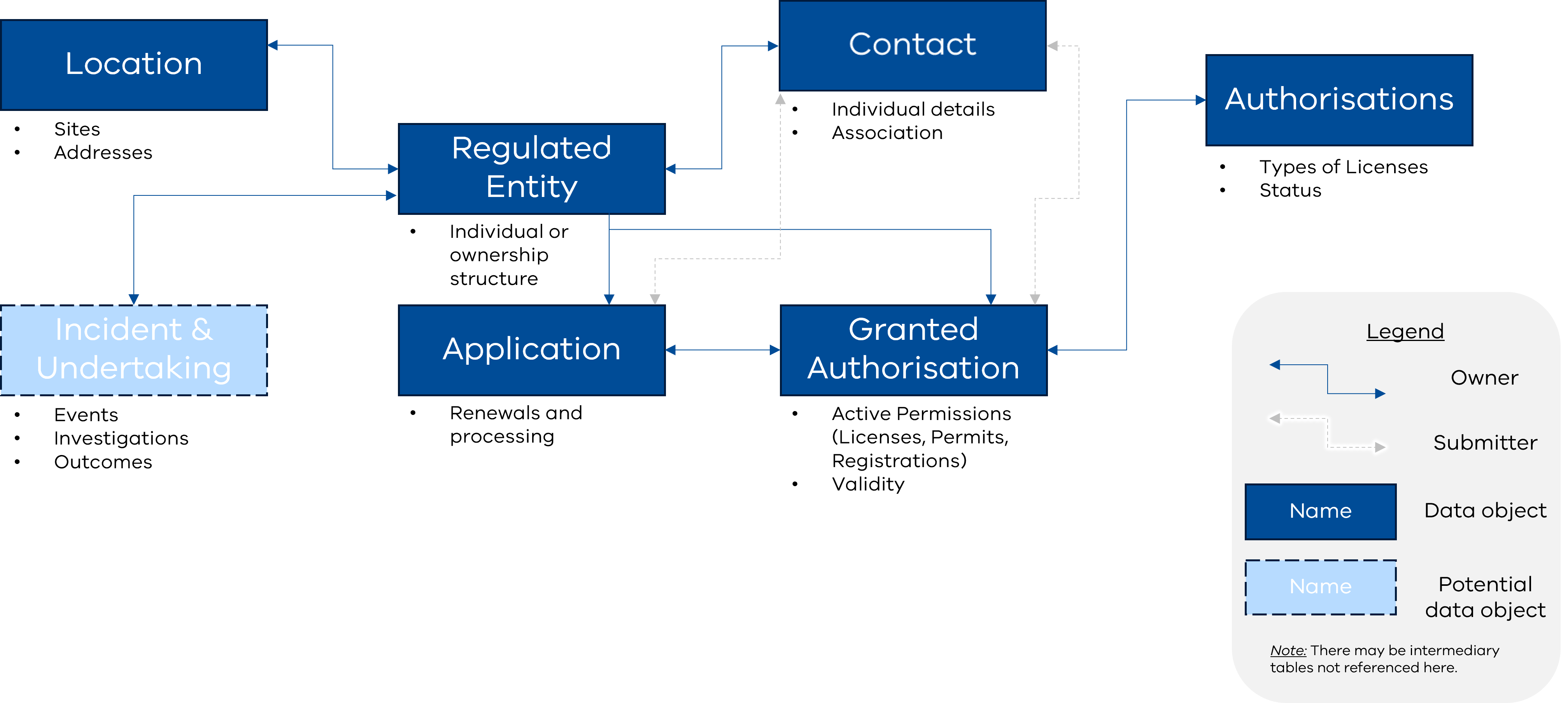
The model below enables regulators to better structure their data for interoperability with common Customer Relationship Management (CRM) applications used across the Victorian Public Sector, supporting improved information sharing. This model aligns with those used by Service Victoria – making it easier to integrate with effective and efficient centrally developed solutions.
Regulators should use this model as:
-
a set of data field requirements for future systems
-
a method of defining data fields when sharing/requesting data from fellow regulators
-
a way of validating gaps within your current data collections
-
a framework for designing interoperable systems
Please feel free to provide feedback to reg.reform@dtf.vic.gov.au.
Common Taxonomy Model
Common Data Taxonomy for regulators
The Common Data Taxonomy is a key pillar in the information sharing framework supporting regulators manage data in a consistent manner. It includes common fields, their descriptions and purpose, and the corresponding equivalents across Service Victoria and Salesforce.
This can be used in a few different ways, including as a:
-
set of data field requirements for future systems
-
method of defining data field when sharing/requesting data from fellow regulators
-
way of validating gaps within your current data collections
-
framework for designing interoperable systems.
Victorian Common Data Taxonomy for Regulators Word 44.63 KB (opens in a new window)
The Victorian Common Data Taxonomy for Regulators has been developed as an initial framework to help regulators manage their permissions data more effectively. Stakeholder feedback on the Taxonomy is encouraged and can be submitted to reg.reform@dtf.vic.gov.au.
The taxonomy in practice
To demonstrate how the regulatory data taxonomy would be applied, the following 3 examples show different authorisation structures and the specific proposed data objects where each piece of information would be recorded.
Please note that the following examples are theoretical and do not represent real entities or permissions.
Example in practice: Corporate Licence
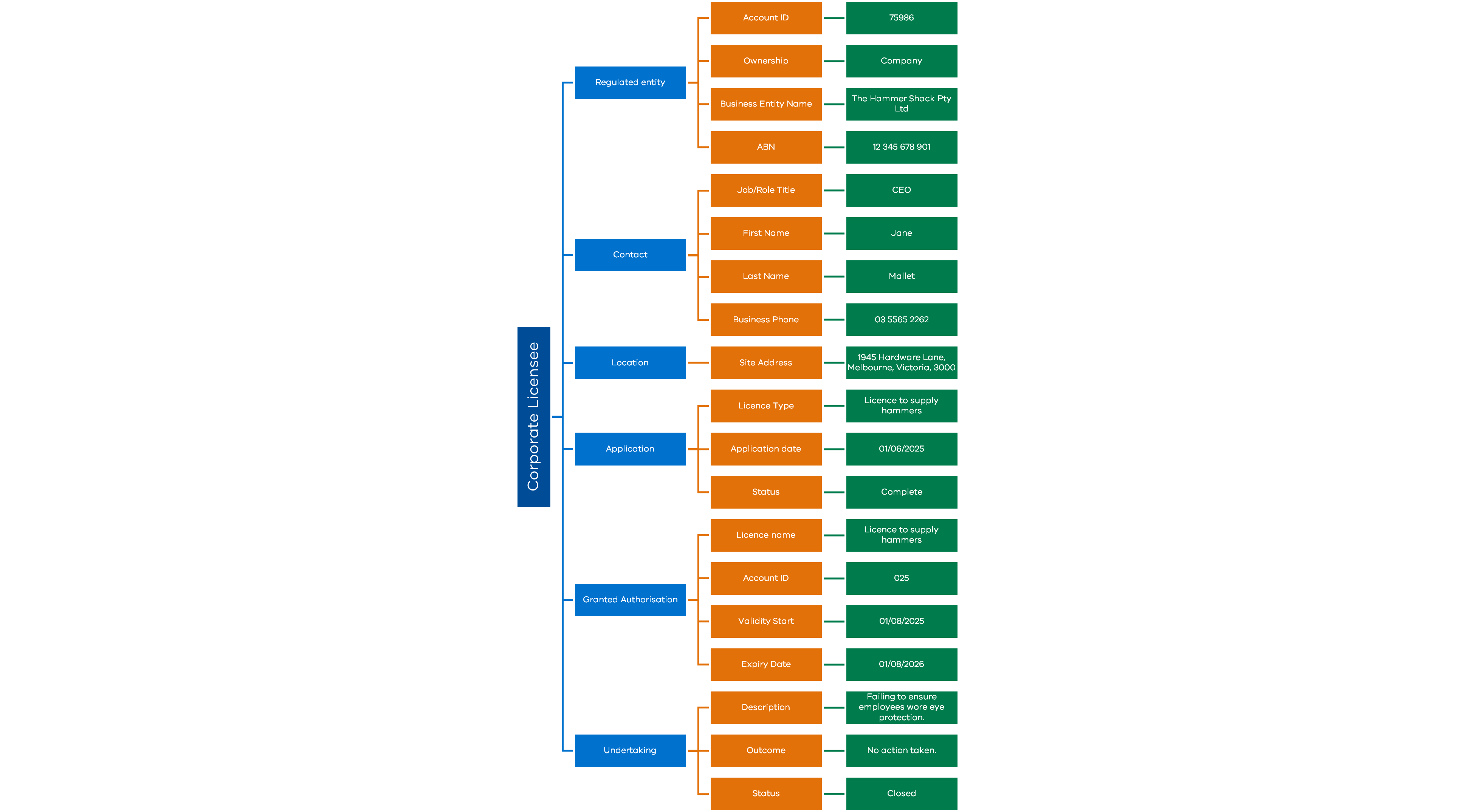
Example details: The Hammer Shack Pty Ltd holds a licence with the Hardware Regulator to supply hammers. This company has previously been investigated following complaints that employees were not wearing adequate eye protection. The Hardware Regulator could not substantiate these allegations, and no action was taken.
Example in practice: Individual Licence
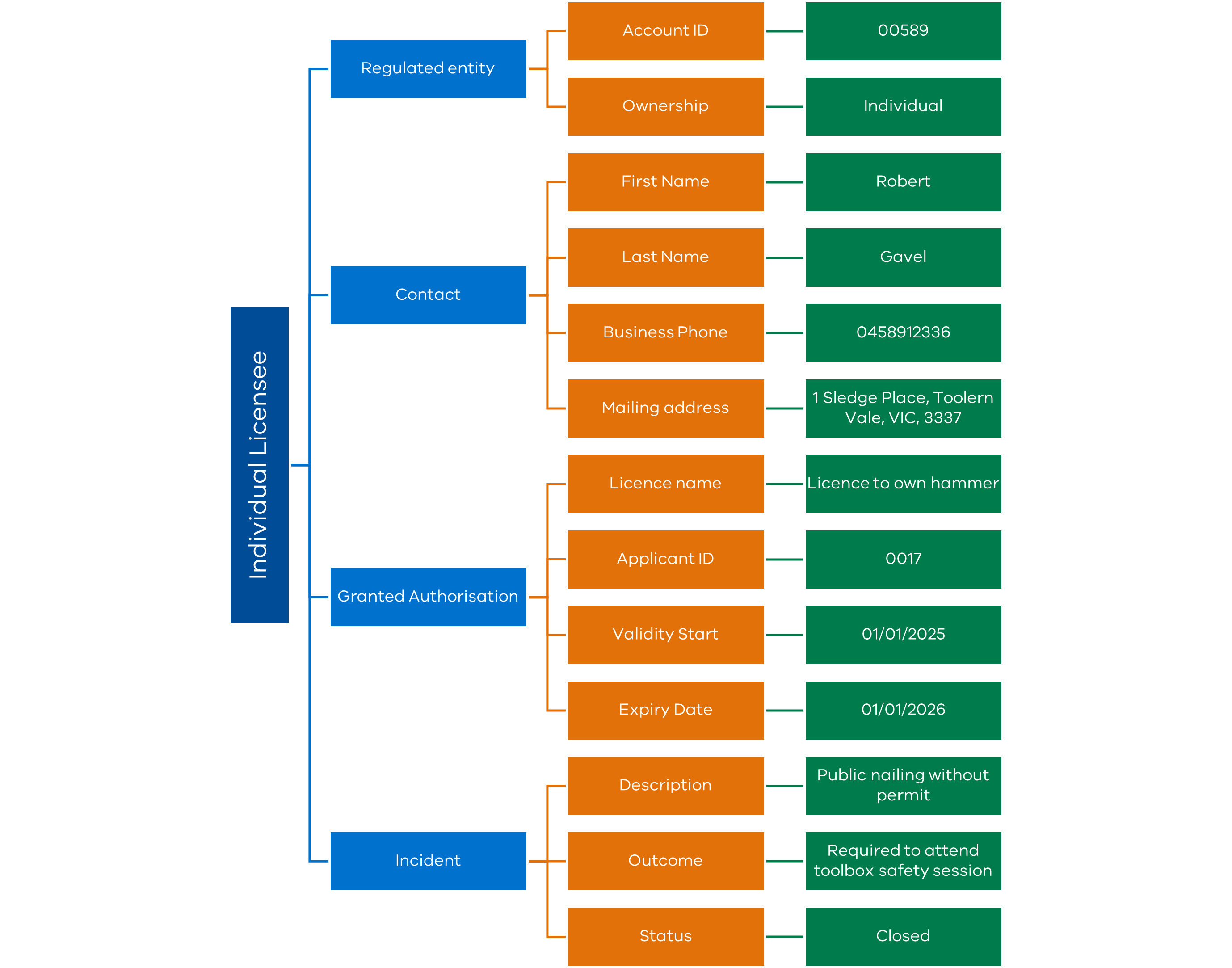
Example details: Robert Gavel holds a licence with the Hardware Regulator to own a hammer. He has previously been investigated by the Hardware Regulator for using his hammer in public without the correct permit and was required to undertake an education course on using tools safely.
Example in practice: General Duty
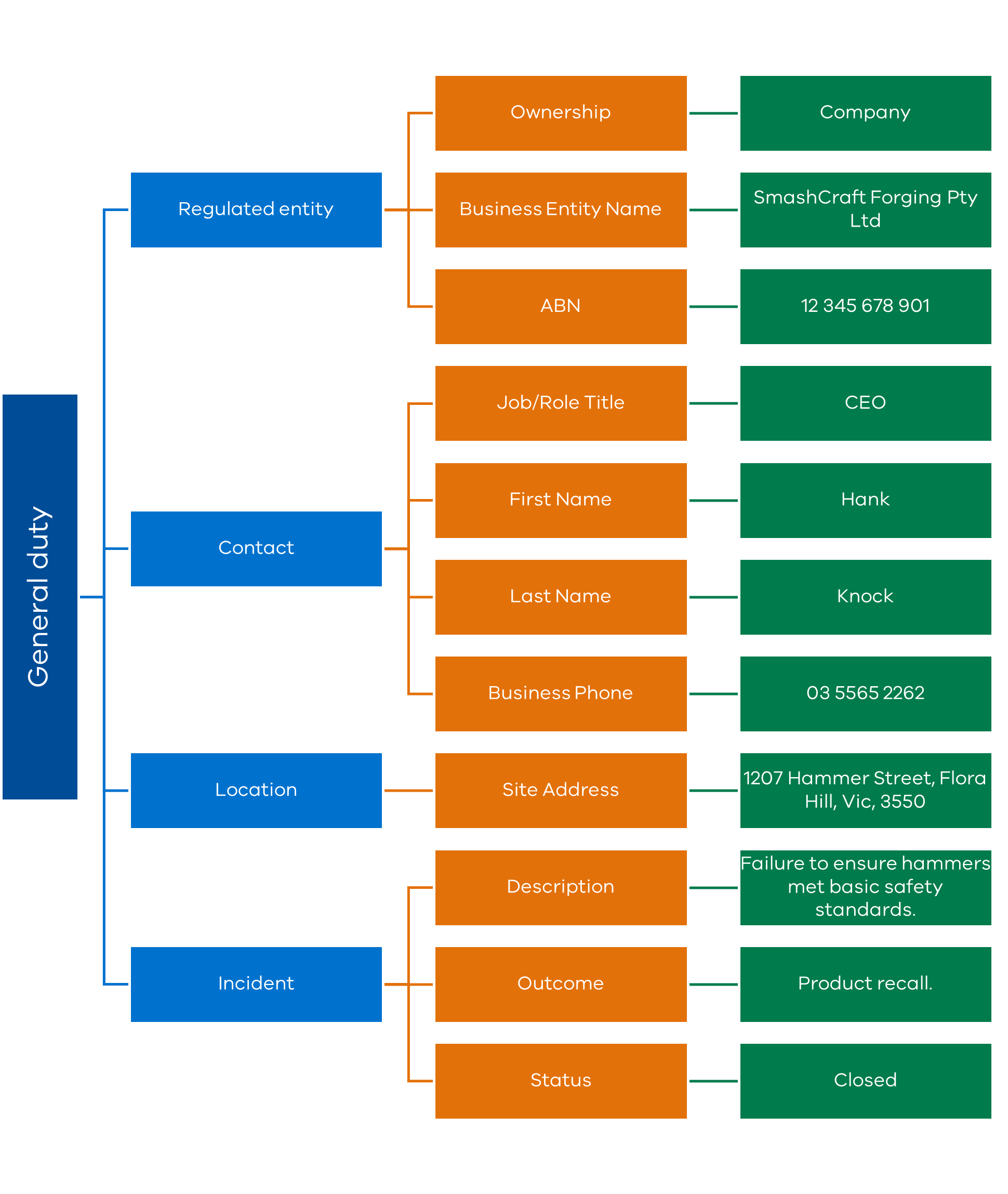
Example details: SmashCraft Forging Pty Ltd, a Bendigo-based tool manufacturer, breached its general duty under the Hardware Act 1989 by failing to adequately test a new hammer with a slippery handle. After tradies reported safety concerns, the Hardware Regulator investigated and confirmed the breach. SmashCraft subsequently recalled the product.
Download examples Word 147.84 KB (opens in a new window)
Updated 27 November 2025
About the VIC Government
- The Premier and ministers
- Find a Vic Gov department, agency or service
- Strategies and policies
- Inquiries and royal commissions
Grants and programs
Jobs and careers
Arts, culture and heritage
Business and the workplace
- Mentally Healthy Workplaces Framework
- Portable Long Service Authority
- Victoria’s racing industry
- Workforce Inspectorate Victoria
- Liquor licensing, sale and supply
Communities
- Children
- First Peoples - State Relations
- Finding records
- Gender equality & women’s leadership
- LGBTIQA+ equality
- Multicultural communities
- Seniors Online
- Veterans support and commemoration
- Volunteering in Victoria
- Youth Central
Education and training
- Victorian Early Childhood Regulatory Authority
- Early childhood education – information for professionals
- Kinder: Best Start, Best Life
- Education – information for parents
- Schools.Vic - information for schools
- Education grants, programs, awards and events
- PROTECT
- TAFE, training and universities sector
- TAFE Victoria
- Victorian Skills Authority
- Apprenticeships Victoria
- Learn Local
Environment, water and energy
Finance and economy
Health and social support
- Family violence reform
- NDIS Worker Screening Check
- NDIS and disability services and support in Victoria
- Patient Review Panel
- Transforming Trauma Victoria
Housing and property
Law and justice
- Adoption
- Births, deaths and marriages
- Honorary justices
- Machete ban
- Safeguarding Victorians against terrorism
- Stolen Generations Reparations Package
- Victims of Crime
- Victorian Racing Tribunal
Safety and emergencies
- Emergency Recovery Victoria
- Victorian Emergency Relief and Recovery Foundation
- Emergency Recovery Resource Portal
- How well do you know fire
- Fire Services Reform
- Water safety
- Marine Search and Rescue
Science and technology
- Data sharing and open data
- Data.vic - discover and access Vic Gov open data
- Developer.Vic - portal for API developers
- Go.vic URL shortener
- Vic Gov IT project dashboard
- Victoria’s free public wi-fi network
- Cyber security in the Victorian Government
Sport and recreation
Traffic and transport
- Cameras Save Lives
- Transport Fines
- Getting Around
- Transport Planning
- Transport Future
- Climate Change and transport
- Future Directions For Transport
- Transport projects
- Ports and Freight
Working in the Victorian Government
- Single Digital Presence home
- Accommodation and Library Services
- Executive employment in the Victorian public sector
- Budget, procurement and funding
- Careers in the Victorian Government
- Council and Regulator Toolkit
- Guidelines for working in government
- Join a government network
- Standards and guidelines
- VicFleet CarPool
- Victorian Government style guide