Victoria’s state emblems
Discover the official state emblems of Victoria: Fossil, the Leadbeater’s Possum, the Helmeted Honeyeater and more.
On this page
- State fossil: Koolasuchus cleelandi
- State animal: Leadbeater’s possum
- State bird: the helmeted honeyeater
- State marine animal: the common seadragon
- State flora: common heath
- State mineral: gold
- State tartan
State fossil: Koolasuchus cleelandi
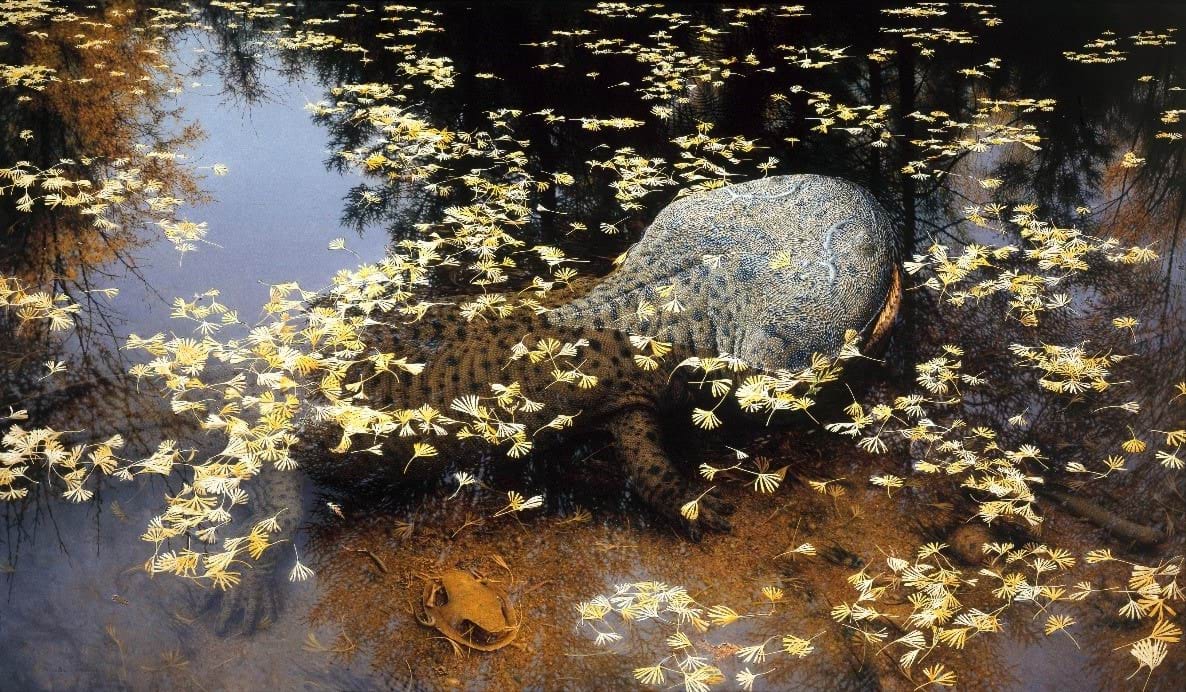
Koolasuchus cleelandi is a 125-million-year-old extinct amphibian.
It was about the size of a car (3 to 4 metres long) that lived alongside dinosaurs in Victoria during the Cretaceous period.
Resembling something between a huge salamander and a crocodile, Koolasuchus cleelandi had dozens of ridged fangs and two-inch tusks growing from the roof of its mouth.
It lived in the rushing rivers that separated Australia and Antarctica, and fed on small dinosaurs, fish and turtles.
Where it was found in Victoria
The fossil was first found in 1978 near San Remo on Bunurong Country and is on permanent display at Melbourne Museum. Fossils of Koolasuchus cleelandi have only been found at the beaches and coves of South Gippsland.
Further information
Find out more about Koolasuchus cleelandi
State animal: Leadbeater’s possum
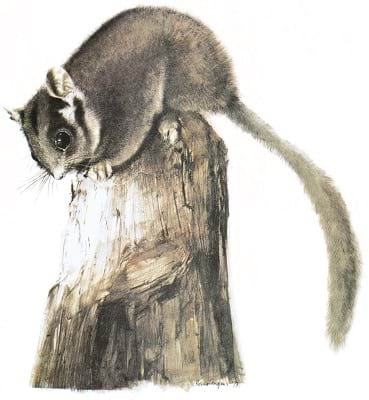
The scientific name of Leadbeater’s possum is Gymnobelideus leadbeateri.
The Leadbeater possums are about 40cm long from nose to tail tip. Their tails account for half their length.
Soft, dense fur covers their body. It’s longer on the club-shaped tail. They are dark greyish-brown with whitish underparts. The face has distinctive markings.
Unlike some of the possums close to their size, it doesn’t have any gliding membrane. It’s a nimble species, which jumps around from branch to branch.
It feeds on insects living on the foliage and under the bark of eucalyptus, honey-dew from insects and some sap and gum.
Leadbeater’s possum breeds from February to November. It produces 1 to 2 young per litter.
Where you can find it in Victoria
It is only found in the mountain ash forests of the Victorian central highlands, from Healesville and Marysville to Mt. Baw Baw.
Further information
Find out more about the Leadbeater’s Possum.
State bird: the helmeted honeyeater
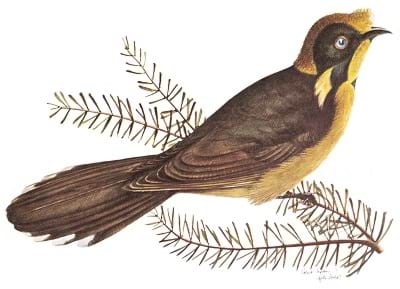
The scientific name of the helmeted honeyeater is Lichenostomus melanops cassidix.
It’s an endangered subspecies of the yellow-tufted honeyeater.
They are about 20cm in length.
The upper parts of the body are olive-grey. Their outer wing and tail feathers are greenish-yellow. Their underparts are yellowish-green with dark streaks. The sides of their heads are glossy black with golden ear-tufts and a yellow throat.
Both crown and forehead are golden yellow. The forehead feathers jut over the base of the bill and make a helmet shape.
Where you can find it in Victoria
It lives in a small area on Woori Yallock Creek near Yellingbo on the outskirts of Melbourne.
The Yellingbo State Wildlife Reserve was established to protect the few remaining colonies.
The helmeted honeyeater is vulnerable to habitat disturbance due to the diverse environment it needs to breed and thrive.
Further information
Find out more about the Helmeted Honeyeater.
State marine animal: the common seadragon
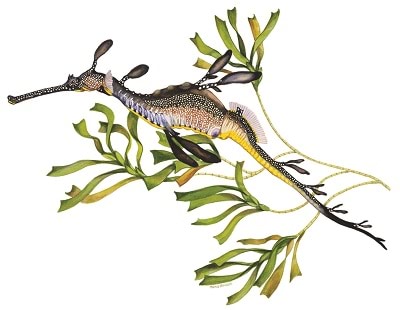
The common seadragon is also known by the name weedy seadragon.
Its scientific name is Phyllopteryx taeniolatus.
It is a member of the Syngnathidae family. It’s related to seahorses, pipehorses and pipefish.
It became Victoria’s official marine emblem by public nomination in 2002.
Where you can find it in Victoria
Common seadragons like to live near kelp, sea grass beds and in kelp forests on offshore reefs.
Common seadragons can be hard to spot because of their natural camouflage. They can be found in many of the marine national parks and sanctuaries along Victoria’s coast:
- Portland
- Point Addis
- Queenscliff
- Barwon Heads
- Portsea
- Rye
- Flinders
- Wilsons Promontory
- Gippsland
More information
Read about the Common Seadragon on the Australian Museum website.
Watch a Behind the News segment on the Common Seadragon
State flora: common heath
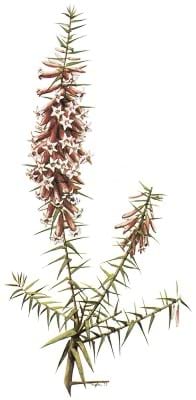
The scientific name of the common heath is Epacris impressa.
It is a member of the Epacridaceae family. It’s related to many other heaths.
The pink common heath became Victoria’s official floral emblem in 1958.
Victoria was the first Australian state to officially recognise such an emblem.
It’s included on Victoria’s coat of arms.
Where you can find it in Victoria
It mainly grows in the south-west part of Victoria, especially in:
- the Grampians
- the Little Desert
More information
Read more about the common heath on the Australian National Botanic Gardens website
State mineral: gold
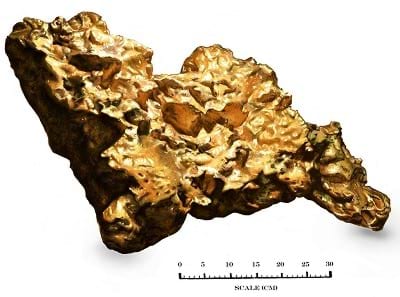
Victoria is the second-largest gold producer in Australia.
Gold was first discovered in Victoria in 1850.
The Victorian gold rush started when it was discovered in Ballarat in 1851. This led to mass immigration, wealth and development in Victoria. At its peak, up to two tonnes of gold per week flowed into the Treasury Building in Melbourne.
Victoria is known for giant masses of gold, referred to as nuggets.
The most famous nugget found in Victoria is the Welcome Stranger. Discovered in Victoria in 1869, it had a calculated weight of over 62 kilograms. It was the largest discovered alluvial gold nugget in the world.
Throughout history, gold has always been a valuable and sought-after precious metal. Its uses include coins, jewellery and other arts.
It also has many practical uses in dentistry, electronics and other fields.
In 2012 both Houses of Parliament recommended that gold be the first mineral emblem of Victoria.
Further information
Find out more about gold in Victoria and gold mining
Find out more about the Australian gold rushes
Find out more about Melbourne during the Victorian Gold Rush
State tartan
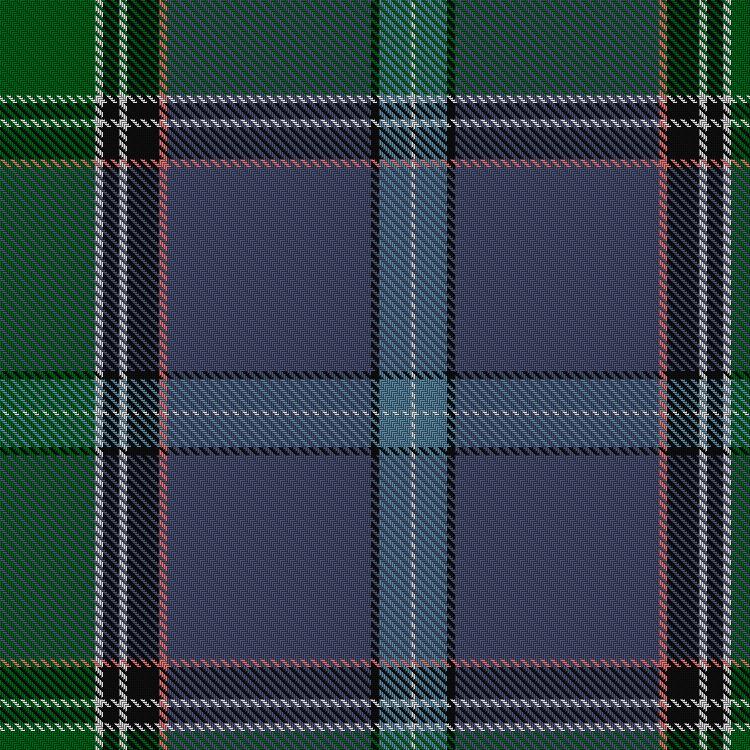
Image: tartanhouse.com.au and tartanregister.gov.uk
The colours of the Victorian State tartan are blue, white, green and pink.
Blue represents the colours of the shield on the Victorian Coat of Arms and represents the background of the Eureka Stockade Flag.
The 5 white lines on the State Tartan represent the 5 white stars of the Southern Cross. These appear on both the Victorian Coat of Arms and the Eureka Stockade Flag.
Green represents the olive branch on the Victorian Coat of Arms.
Pink represents the Victorian floral emblem, the common heath.
Updated 8 January 2026
About the VIC Government
- The Premier and ministers
- Find a Vic Gov department, agency or service
- Strategies and policies
- Inquiries and royal commissions
Grants and programs
Jobs and careers
Arts, culture and heritage
Business and the workplace
- Mentally Healthy Workplaces Framework
- Portable Long Service Authority
- Victoria’s racing industry
- Workforce Inspectorate Victoria
- Liquor licensing, sale and supply
Communities
- Children
- First Peoples - State Relations
- Finding records
- Gender equality & women’s leadership
- LGBTIQA+ equality
- Multicultural communities
- Seniors Online
- Veterans support and commemoration
- Volunteering in Victoria
- Youth Central
Education and training
- Victorian Early Childhood Regulatory Authority
- Early childhood education – information for professionals
- Kinder: Best Start, Best Life
- Education – information for parents
- Schools.Vic - information for schools
- Education grants, programs, awards and events
- PROTECT
- TAFE, training and universities sector
- TAFE Victoria
- Victorian Skills Authority
- Apprenticeships Victoria
- Learn Local
Environment, water and energy
Finance and economy
Health and social support
- Family violence reform
- NDIS Worker Screening Check
- NDIS and disability services and support in Victoria
- Patient Review Panel
- Transforming Trauma Victoria
Housing and property
Law and justice
- Adoption
- Births, deaths and marriages
- Honorary justices
- Machete ban
- Safeguarding Victorians against terrorism
- Stolen Generations Reparations Package
- Victims of Crime
- Victorian Racing Tribunal
Safety and emergencies
- Emergency Recovery Victoria
- Victorian Emergency Relief and Recovery Foundation
- Emergency Recovery Resource Portal
- How well do you know fire
- Fire Services Reform
- Water safety
- Marine Search and Rescue
Science and technology
- Data sharing and open data
- Data.vic - discover and access Vic Gov open data
- Developer.Vic - portal for API developers
- Go.vic URL shortener
- Vic Gov IT project dashboard
- Victoria’s free public wi-fi network
- Cyber security in the Victorian Government
Sport and recreation
Traffic and transport
- Cameras Save Lives
- Transport Fines
- Getting Around
- Transport Planning
- Transport Future
- Climate Change and transport
- Future Directions For Transport
- Transport projects
- Ports and Freight
Working in the Victorian Government
- Single Digital Presence home
- Accommodation and Library Services
- Executive employment in the Victorian public sector
- Budget, procurement and funding
- Careers in the Victorian Government
- Council and Regulator Toolkit
- Guidelines for working in government
- Join a government network
- Standards and guidelines
- VicFleet CarPool
- Victorian Government style guide