School-wide Positive Behaviour Support
Creating positive school environments to boost student success and engagement.
On this page
- What is SWPBS
- Features and benefits of SWPBS
- How SWPBS supports all students
- SWPBS in Victoria
- Case studies of SWPBS in action
- Apply to join
- Find out more
What is SWPBS
School-wide Positive Behaviour Support (SWPBS) is a globally recognised, evidence-based framework that helps schools create safe, positive, and inclusive environments where students and staff can thrive.
SWPBS supports the Education State priorities and the Victorian Teaching and Learning Model 2.0 by helping schools build consistent, whole-school systems that promote positive behaviour, wellbeing, and inclusion—creating the right conditions for effective teaching, learning, and leadership across the school.
https://player.vimeo.com/video/854261947?autoplay=0
Introduction to School-wide Positive Behaviour Support
This document provides school leaders with an overview of SWPBS and practical guidance for its implementation.
- Information for schools (PDF, 3.5MB)(opens in a new window)
- Information for schools - accessible version (DOCX, 3.5MB)
This document outlines the 7 essential features a school commits to implementing as part of the SWPBS framework.
- Essential Features of SWPBS (PDF, 79KB)
- Essential Features of SWPBS - accessible version (DOCX, 142KB)
Features and benefits of SWPBS
SWPBS helps schools to:
- increase respectful and positive behaviour
- strengthen social and emotional wellbeing
- reduce classroom disruptions and increase learning time
- build positive, respectful relationships between students and staff
- create safe, orderly, and supportive school environments.
Schools implementing SWPBS:
- use inclusive, evidence-based strategies to support all students
- form teams to guide implementation and maintain momentum
- provide ongoing training and coaching to staff
- partner with students, families, and communities to ensure fairness and consistency
- use data to monitor progress and improve practices.
How SWPBS supports all students
SWPBS is built around four key elements
- Outcomes: Clear goals related to behaviour, wellbeing, academic success, and school climate
- Data: Evidence collected to monitor progress, identify needs, and guide decisions
- Practices: Teaching strategies and interventions to encourage positive behaviour
- Systems: Structures and processes that support consistent implementation, such as leadership teams and professional development
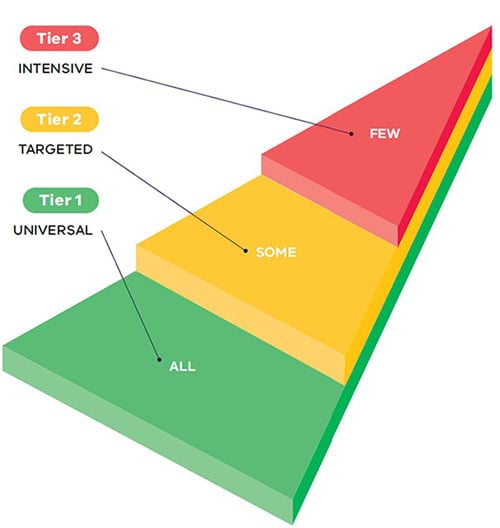
These elements are delivered through a multi-tiered system of support
- Tier 1: Universal Support – for all students, staff, and settings
- Tier 2: Targeted Support – for students at risk of behavioural challenges
- Tier 3: Intensive Support – for students with complex and individualised needs
SWPBS in Victoria
Since 2018, more than 700 Victorian government schools have participated in SWPBS.
Building on a $37.5 million investment since 2018, the Victorian Government has committed an additional $10.4 million over four years in the 2025–26 Budget.
Schools joining the SWPBS initiative receive the following supports:
- comprehensive professional learning for school leaders and teams
- individualised support from a specialist SWPBS coach
- annual assessment of implementation
- access to the Online Resources Hub
- eligibility to apply for annual SWPBS Awards.
Evaluation and outcomes
An external evaluation (November 2023) found a positive relationship between effective SWPBS implementation and improved school outcomes:
- Greater student connectedness, inclusion, and respect for diversity
- Improved classroom behaviour and reduced bullying
- More students reporting they feel supported by an adult at school
- Increased staff collaboration and confidence
- Fewer suspension days
Read the full evaluation of the Victorian SWPBS initiative (PPT, 3.5MB)
Case studies of SWPBS in action
Three case study videos provide insight into the practical benefits of School-wide Positive Behaviour Support (SWPBS) across different settings.
Each case aligns with the five FISO 2.0 core elements:
- teaching and learning
- engagement
- support and resources
- leadership
- assessment.
St Albans Heights Primary School
St. Albans Heights Primary School shares how implementing SWPBS transformed their school by teaching expected behaviours, building strong values, and creating a safer, more inclusive environment. Staff and students highlight the positive impact on safety, relationships, and learning.
https://player.vimeo.com/video/877321515?autoplay=0
SWPBS - St Albans Heights Primary School
Cranbourne Secondary College
Shows the role of clear expectations, encouragement, and strategic data use in improving behaviour and respect.
Cranbourne Secondary College shows how SWPBS has transformed their school through clear behaviour expectations, encouragement of positive interactions, and strategic use of data. This approach has created a safer, more respectful environment, improving behaviour and student success.
https://player.vimeo.com/video/877320879?autoplay=0
SWPBS - Cranbourne Secondary College
Yarra Ranges Special Development School
Yarra Ranges Special Development School uses SWPBS to help students with disabilities thrive. With clear expectations — be safe, responsible, and respectful — tiered supports, and tools like the MeTV program, the school fosters positive behaviour across all settings.
https://player.vimeo.com/video/877320223?autoplay=0
SWPBS acknowledgement awards
Participating schools are encouraged to apply for the annual acknowledgment awards, which highlight outstanding examples of SWPBS in primary, secondary and specialist schools. Awards are open to any school active in the initiative that meets the criteria.
To apply, schools submit detailed evidence of their implementation. The award criteria is updated annually in Term 1 and listed below, along with the previous year’s award-winning schools.
- Award level criteria (PDF, 175KB): details of the award criteria and required evidence for each of the 5 levels.
- School achieving awards (PDF, 240KB): a list of schools that achieved awards for their implementation in 2025.
Apply to join
Applications for the 2026 intake have closed.
Schools can apply to join through an annual process in Term 3. Applications to join SWPBS in 2026 have closed.
Online information briefing sessions are held in early Term 3 to provide an overview of the initiative and how to submit an application.
Following the information briefings, schools submit an application by the end of Term 3.
Schools joining SWPBS will commence implementation in Term 1, 2027. For further information or support please see contact details below.
Find out more
For further information about SWPBS, visit the Department’s Policy and Advisory Library behaviour page or contact the SWPBS central team:
- phone: 03 7022 1383
- email: positive.behaviour@education.vic.gov.au
Updated 26 March 2026
Related links
- Positive Classroom Management Strategies
- Disability Inclusion
- Master of Inclusive Education Program
- Respectful Relationships
- Marrung
- LOOKOUT
About the VIC Government
- The Premier and ministers
- Find a Vic Gov department, agency or service
- Strategies and policies
- Inquiries and royal commissions
Grants and programs
Jobs and careers
Arts, culture and heritage
Business and the workplace
- Mentally Healthy Workplaces Framework
- Portable Long Service Authority
- Victoria’s racing industry
- Workforce Inspectorate Victoria
- Liquor licensing, sale and supply
Communities
- Children
- First Peoples - State Relations
- Finding records
- Gender equality & women’s leadership
- LGBTIQA+ equality
- Multicultural communities
- Seniors Online
- Veterans support and commemoration
- Volunteering in Victoria
- Youth Central
Education and training
- Victorian Early Childhood Regulatory Authority
- Early childhood education – information for professionals
- Kinder: Best Start, Best Life
- Education – information for parents
- Schools.Vic - information for schools
- Education grants, programs, awards and events
- PROTECT
- TAFE, training and universities sector
- TAFE Victoria
- Victorian Skills Authority
- Apprenticeships Victoria
- Learn Local
Environment, water and energy
Finance and economy
Health and social support
- Family violence reform
- NDIS Worker Screening Check
- NDIS and disability services and support in Victoria
- Patient Review Panel
- Transforming Trauma Victoria
Housing and property
Law and justice
- Adoption
- Births, deaths and marriages
- Honorary justices
- Machete ban
- Safeguarding Victorians against terrorism
- Stolen Generations Reparations Package
- Victims of Crime
- Victorian Racing Tribunal
Safety and emergencies
- Emergency Recovery Victoria
- Victorian Emergency Relief and Recovery Foundation
- Emergency Recovery Resource Portal
- How well do you know fire
- Fire Services Reform
- Water safety
- Marine Search and Rescue
Science and technology
- Data sharing and open data
- Data.vic - discover and access Vic Gov open data
- Developer.Vic - portal for API developers
- Go.vic URL shortener
- Vic Gov IT project dashboard
- Victoria’s free public wi-fi network
- Cyber security in the Victorian Government
Sport and recreation
Traffic and transport
- Cameras Save Lives
- Transport Fines
- Getting Around
- Transport Planning
- Transport Future
- Climate Change and transport
- Future Directions For Transport
- Transport projects
- Ports and Freight
Working in the Victorian Government
- Single Digital Presence home
- Accommodation and Library Services
- Executive employment in the Victorian public sector
- Budget, procurement and funding
- Careers in the Victorian Government
- Council and Regulator Toolkit
- Guidelines for working in government
- Join a government network
- Standards and guidelines
- VicFleet CarPool
- Victorian Government style guide