Phonics: a guide for parents and carers
On this page
- Overview
- What is phonics?
- What is systematic synthetic phonics?
- What does this mean for you and your child if you speak another language or a dialect of English at home?
- Code-switching and why it matters
- Helpful tips for supporting your child
Overview
Reading is a vital component of the Victorian Curriculum in government schools. It not only opens new worlds and broadens understanding but also fosters enjoyment and curiosity. Developing confident, engaged readers is key, and learning to read should be an exciting and rewarding experience for children. Phonics, which teaches the connection between letters and sounds, is a crucial step in making reading accessible and enjoyable for all students.
From 2025, all Victorian primary schools will use systematic synthetic phonics as the basis of their reading programs. This evidence-based approach supports your child in developing critical word reading and spelling skills right from the Foundation years.
Key Messages
- Systematic synthetic phonics, an evidence-based approach, will be taught to children in Victorian government schools.
- It teaches children to read and spell words by learning sound-letter relationships and using these relationships to blend sounds together in reading and segment sounds in spelling.
- Your child’s home language is just as important and valuable as Standard Australian English. It is a part of their identity and something to be proud of.
- For many children, Standard Australian English may be their second or third language or dialect.
- Koorie English is not a ‘bad’ form of Standard Australian English.
- A child’s home language, such as Koorie English, Aboriginal English, or other dialects or languages, may sound different when spoken by different people.
What is phonics?
Phonics is a way of teaching reading and writing by connecting sounds with letters or groups of letters. Phonic skills help children understand how letters link to sounds in spoken language and how those letters work together to form words.
What is systematic synthetic phonics?
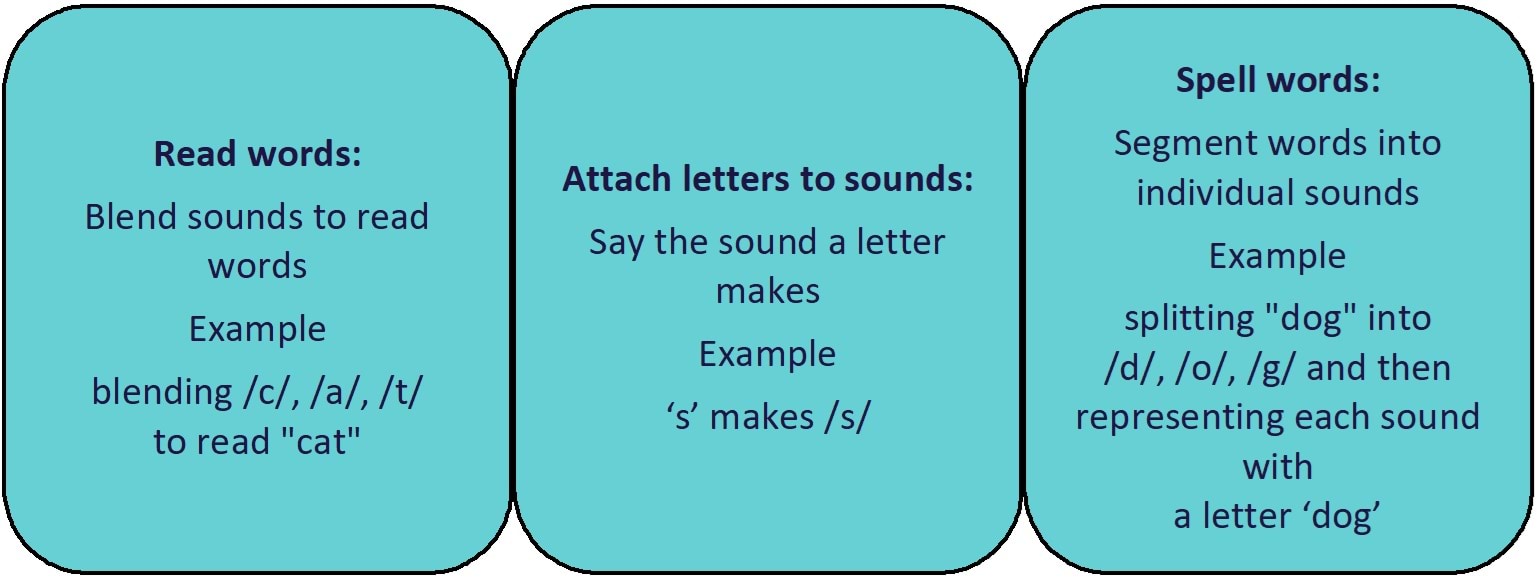
Systematic synthetic phonics is an evidence-based way of teaching children to read and write words, and is used from Prep to Grade 2. This approach is called “systematic” because it follows a clear, step-by-step order for teaching sounds. It’s called “synthetic” because children first learn individual letter sounds and then learn how to blend those sounds together to form words.
Teaching children the connection between letters and their corresponding sounds, means they gain the skills to read words by sounding them out (decoding). They also learn to write words by breaking them down into sounds (encoding).
Children being taught systematic synthetic phonics become increasingly proficient in reading and spelling words. This increases their confidence, motivation and enjoyment of reading.
Learning systematic synthetic phonics
What does this mean for you and your child if you speak another language or a dialect of English at home?
Learning phonics helps children to read and write using Standard Australian English; the language used in the Victorian Curriculum. Families may speak different languages or dialects at home. Some families may use a traditional Aboriginal or Torres Strait Islander language or a dialect of English, such as Koorie English. Some may use a language other than English from a different country. For children who speak another language or dialect at home, Standard Australian English might only be spoken at school.
It is important for all children to know their home language is valuable. Every child needs to feel that their home language is important and something to be proud of, while also learning Standard Australian English at school. Understanding how to move between languages or dialects is a valuable skill known as code-switching.
If you would like to learn more about English as an Additional Language (EAL), please visit English as an Additional Language (EAL). If you would like to learn more about Koorie English, please visit Koorie English Online.
Code-switching and why it matters
Code-switching is when people switch between different languages or ways of speaking depending on who they are talking to and where they are. It is a valuable skill that helps children communicate effectively in different situations.
You can talk with your child about how we all change the way we speak depending on who we are with. For example, children might choose a different language or way of speaking to their teacher than to an aunty or uncle, and differently again when talking to their friends.
For more information about students using multiple languages, see Plurilingual awareness.
Helpful tips for supporting your child
If your child feels worried or notices their way of speaking is different from others:
- reassure them that there’s nothing wrong with how they speak - everyone speaks differently, and that’s okay
- encourage them to keep using their home language. It is an important part of who they are.
If your child is practising or speaking Standard Australian English at home:
- respond using the language you normally use to speak with your child
- remind them that they can switch back to their home language when they’re at home or with family or community or friends.
If your child brings home different types of books or texts from school:
- ask them to tell you what they know about the new book or texts
- encourage them to read aloud any new words or parts of the book, using the phonics strategies they’ve learned at school.
Updated 27 March 2026
About the VIC Government
- The Premier and ministers
- Find a Vic Gov department, agency or service
- Strategies and policies
- Inquiries and royal commissions
Grants and programs
Jobs and careers
Arts, culture and heritage
Business and the workplace
- Mentally Healthy Workplaces Framework
- Portable Long Service Authority
- Victoria’s racing industry
- Workforce Inspectorate Victoria
- Liquor licensing, sale and supply
Communities
- Children
- First Peoples - State Relations
- Finding records
- Gender equality & women’s leadership
- LGBTIQA+ equality
- Multicultural communities
- Seniors Online
- Veterans support and commemoration
- Volunteering in Victoria
- Youth Central
Education and training
- Victorian Early Childhood Regulatory Authority
- Early childhood education – information for professionals
- Kinder: Best Start, Best Life
- Education – information for parents
- Schools.Vic - information for schools
- Education grants, programs, awards and events
- PROTECT
- TAFE, training and universities sector
- TAFE Victoria
- Victorian Skills Authority
- Apprenticeships Victoria
- Learn Local
Environment, water and energy
Finance and economy
Health and social support
- Family violence reform
- NDIS Worker Screening Check
- NDIS and disability services and support in Victoria
- Patient Review Panel
- Transforming Trauma Victoria
Housing and property
Law and justice
- Adoption
- Births, deaths and marriages
- Honorary justices
- Machete ban
- Safeguarding Victorians against terrorism
- Stolen Generations Reparations Package
- Victims of Crime
- Victorian Racing Tribunal
Safety and emergencies
- Emergency Recovery Victoria
- Victorian Emergency Relief and Recovery Foundation
- Emergency Recovery Resource Portal
- How well do you know fire
- Fire Services Reform
- Water safety
- Marine Search and Rescue
Science and technology
- Data sharing and open data
- Data.vic - discover and access Vic Gov open data
- Developer.Vic - portal for API developers
- Go.vic URL shortener
- Vic Gov IT project dashboard
- Victoria’s free public wi-fi network
- Cyber security in the Victorian Government
Sport and recreation
Traffic and transport
- Cameras Save Lives
- Transport Fines
- Getting Around
- Transport Planning
- Transport Future
- Climate Change and transport
- Future Directions For Transport
- Transport projects
- Ports and Freight
Working in the Victorian Government
- Single Digital Presence home
- Accommodation and Library Services
- Executive employment in the Victorian public sector
- Budget, procurement and funding
- Careers in the Victorian Government
- Council and Regulator Toolkit
- Guidelines for working in government
- Join a government network
- Standards and guidelines
- VicFleet CarPool
- Victorian Government style guide