Mobile digital road safety cameras
Mobile digital road safety cameras are installed in unmarked vehicles. Although mobile digital road safety cameras are not sign-posted, they are not deliberately hidden.
On this page
- How mobile digital road safety cameras work
- Gatso T-Series Mobile Digital Road Safety Camera
- Accuracy of mobile digital road safety cameras
- Operating guidelines
To achieve Victoria’s road safety objectives in the most effective manner, enforcement activity must be consistent, meaningful and applied at high-risk times.
Victoria Police is the authority responsible for choosing locations and operating times of mobile digital road safety cameras in Victoria. The highest priority locations are those with a high crash-risk and speed-related problem areas.
A list of approved mobile digital road safety camera locations is published monthly.
Mobile digital road safety cameras can be installed in unmarked vehicles. Although mobile digital road safety cameras are not sign-posted, they are not deliberately hidden.
How mobile digital road safety cameras work
Mobile digital road safety cameras use a radar to determine the speed and the direction of a vehicle. The camera can detect speeding vehicles in 1 or both directions and from either side of the road.
Gatso T-Series Mobile Digital Road Safety Camera
In December 2019, the Victorian Government deployed the Gatso T-Series Mobile Digital Road Safety Camera, which can enforce over 6 lanes of traffic in either direction and can detect multiple vehicles simultaneously. The Gatso T-Series Mobile Digital Road Safety Camera is operated as a rear facing camera, installed in the back of the camera car to accommodate the various components and associated equipment.
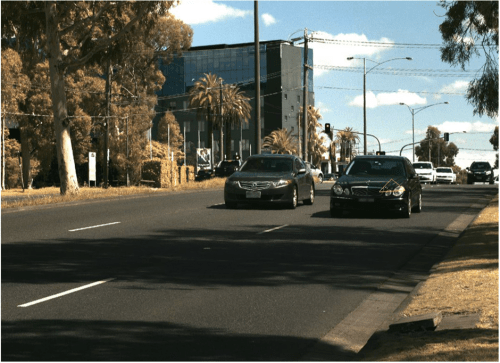
If a vehicle is speeding, it will trigger the camera and create an image of the speed detection. A Target Vehicle Marker is generated automatically by the camera system to identify the speeding vehicle and appears on the image as a yellow triangle.
If there are multiple vehicles in a fine image, the offending vehicle is identified with the yellow triangle. Vehicles that are not speeding will not be marked in the image.
Section 83A Road Safety Act 1986 certificates produced from Gatso T-Series Mobile Digital Road Safety Cameras contain the vehicle marker in the image.
Accuracy of mobile digital road safety cameras
Prior to setup and at the end of each mobile digital road safety camera session, the specially trained operator conducts a full inspection of the site (including speed zone and site boundary confirmation) and test shots are taken to ensure the system is working correctly.
For more information about camera accuracy and the process before a fine is issued, see speed verification.
Operating guidelines
To maintain community confidence in the mobile digital road safety camera program, it is important for the operational use of mobile digital road safety cameras to be fair and reasonable.
The Victoria Police Traffic Camera Office provides guidelines around the operation of the Gatso T-Series Mobile Diital Road Safety Camera through the manual below.
The guidelines specify that:
- While using a mobile digital road safety camera, the operator can park the vehicle on a footpath, a nature strip, a dividing strip or a timed parking zone.
- There are no technical or legal restrictions on placing a mobile digital road safety camera on a slope, gradient or hill.
Updated 12 August 2025
About the VIC Government
- The Premier and ministers
- Find a Vic Gov department, agency or service
- Strategies and policies
- Inquiries and royal commissions
Grants and programs
Jobs and careers
Arts, culture and heritage
Business and the workplace
- Mentally Healthy Workplaces Framework
- Portable Long Service Authority
- Victoria’s racing industry
- Workforce Inspectorate Victoria
- Liquor licensing, sale and supply
Communities
- Children
- First Peoples - State Relations
- Finding records
- Gender equality & women’s leadership
- LGBTIQA+ equality
- Multicultural communities
- Seniors Online
- Veterans support and commemoration
- Volunteering in Victoria
- Youth Central
Education and training
- Victorian Early Childhood Regulatory Authority
- Early childhood education – information for professionals
- Kinder: Best Start, Best Life
- Education – information for parents
- Schools.Vic - information for schools
- Education grants, programs, awards and events
- PROTECT
- TAFE, training and universities sector
- TAFE Victoria
- Victorian Skills Authority
- Apprenticeships Victoria
- Learn Local
Environment, water and energy
Finance and economy
Health and social support
- Family violence reform
- NDIS Worker Screening Check
- NDIS and disability services and support in Victoria
- Patient Review Panel
- Transforming Trauma Victoria
Housing and property
Law and justice
- Adoption
- Births, deaths and marriages
- Honorary justices
- Machete ban
- Safeguarding Victorians against terrorism
- Stolen Generations Reparations Package
- Victims of Crime
- Victorian Racing Tribunal
Safety and emergencies
- Emergency Recovery Victoria
- Victorian Emergency Relief and Recovery Foundation
- Emergency Recovery Resource Portal
- How well do you know fire
- Fire Services Reform
- Water safety
- Marine Search and Rescue
Science and technology
- Data sharing and open data
- Data.vic - discover and access Vic Gov open data
- Developer.Vic - portal for API developers
- Go.vic URL shortener
- Vic Gov IT project dashboard
- Victoria’s free public wi-fi network
- Cyber security in the Victorian Government
Sport and recreation
Traffic and transport
- Cameras Save Lives
- Transport Fines
- Getting Around
- Transport Planning
- Transport Future
- Climate Change and transport
- Future Directions For Transport
- Transport projects
- Ports and Freight
Working in the Victorian Government
- Single Digital Presence home
- Accommodation and Library Services
- Executive employment in the Victorian public sector
- Budget, procurement and funding
- Careers in the Victorian Government
- Council and Regulator Toolkit
- Guidelines for working in government
- Join a government network
- Standards and guidelines
- VicFleet CarPool
- Victorian Government style guide