The Kindergarten Teaching Excellence Approach
Early childhood professionals in Victoria can now access high-quality, on-demand and tailored supports to meet their specific learning needs.
On this page
- Introducing the Kindergarten Teaching Excellence Approach
- About the Kindergarten Teaching Excellence Approach
- Why a Teaching Excellence Approach?
- Key actions to deliver the Kindergarten Teaching Excellence Approach
- About the new Early Childhood Hub
Introducing the Kindergarten Teaching Excellence Approach
The Kindergarten Teaching Excellence Approach represents a major shift in how professional learning and practice development is designed and delivered for Victorian Funded Kindergarten services.
Early childhood professionals now have access to tailored, high-quality courses and supports—available on demand—to meet their individual learning needs.
The Kindergarten Teaching Excellence Approach is designed for all professionals working in Victorian Funded Kindergartens, including educators, teachers, educational leaders, and service leaders—regardless of the type of setting or organisation. All supports are fully funded by the Victorian Department of Education, ensuring broad and equitable access.
This initiative builds on past work and introduces a practitioner-led system of support designed to continuously improve teaching practice and outcomes for children.
About the Kindergarten Teaching Excellence Approach
The Kindergarten Teaching Excellence Approach was designed to improve child learning and development outcomes through 2 key objectives:
- Foster rich ‘serve and return’ interactions between early childhood educators and children, within warm, respectful environments.
- Develop intentional play-based teaching practices, underpinned by current subject matter knowledge.
The Kindergarten Teaching Excellence Approach will achieve these objectives through focusing investment across 5 priority areas. There are 5 priority areas to focus on. These areas are:
- Improve continuity through deeper collaboration using aligned learning progressions.
- Build a research base and improve access to, and use of, high-quality evidence.
- Expand teacher and educator skills and knowledge of content and pedagogy.
- Embed assessment to improve reflective practice and continuous growth.
- Strengthen leadership to prioritise teaching and learning.
Why a Teaching Excellence Approach?
The Best Start, Best Life reforms are transforming early childhood education in Victoria. With Free Kinder now available for Three- and Four-Year-Olds, it’s more important than ever to support high-quality teaching.
Teaching Excellence builds on a long-standing focus on practice improvement, starting with the launch of the Victorian Early Years Learning and Development Framework in 2009.
This new approach introduces a more sophisticated, collaborative system of professional support—developed with input from educators, sector leaders, and experts—designed to strengthen quality at every level.
Key actions to deliver the Kindergarten Teaching Excellence Approach
There are three key actions that reflect the department’s initiative in delivering professional learning and development. These actions are:
- Early Childhood Hub: A new online platform providing educators, teachers, and leaders with access to the right resources, training, and supports at the right time.
- Significantly expanded professional learning: A growing suite of professional learning programs are available. New courses and resources will be added based on the evolving need of users and the sector.
- Professional Practice Support Categories: Support categories have been developed to ensure there are supports available for all career stages from new graduates, to experienced teachers and sector leaders. The categories include:
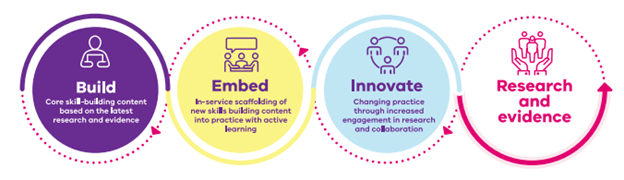
- Build: On-demand resources for core skill-building, knowledge refreshers, and levelling up practice using evidence-based approaches.
- Embed: In-service supports for collaborative team development and embedding strong leadership, culture, and shared philosophy.
- Innovate: Advanced in-service support for experienced leaders aiming to improve practice across entire services.
Each category is backed by current research and designed to elevate reflective practice, professional conversations, and ultimately, outcomes for children.
About the new Early Childhood Hub
The Early Childhood Hub will allow early childhood professionals to enrol, complete, and track their professional learning over time. Courses and supports will be delivered under the three professional learning categories of Build, Embed and Innovate. There will also be an area to connect with the latest Research. This will ensure that programs on the Early Childhood Hub will:
- Cater to different skill levels and experience in the sector.
- Provide various delivery modes that suit different learning needs.
- Be based on the latest research and adult learning methodologies and be updated as research changes.
For more information contact our Early Childhood Hub Helpdesk via email earlychildhoodhub@education.vic.gov.au or visit: earlychildhoodhub.vic.gov.au
Early childhood education and care
Updated 27 March 2026
About the VIC Government
- The Premier and ministers
- Find a Vic Gov department, agency or service
- Strategies and policies
- Inquiries and royal commissions
Grants and programs
Jobs and careers
Arts, culture and heritage
Business and the workplace
- Mentally Healthy Workplaces Framework
- Portable Long Service Authority
- Victoria’s racing industry
- Workforce Inspectorate Victoria
- Liquor licensing, sale and supply
Communities
- Children
- First Peoples - State Relations
- Finding records
- Gender equality & women’s leadership
- LGBTIQA+ equality
- Multicultural communities
- Seniors Online
- Veterans support and commemoration
- Volunteering in Victoria
- Youth Central
Education and training
- Victorian Early Childhood Regulatory Authority
- Early childhood education – information for professionals
- Kinder: Best Start, Best Life
- Education – information for parents
- Schools.Vic - information for schools
- Education grants, programs, awards and events
- PROTECT
- TAFE, training and universities sector
- TAFE Victoria
- Victorian Skills Authority
- Apprenticeships Victoria
- Learn Local
Environment, water and energy
Finance and economy
Health and social support
- Family violence reform
- NDIS Worker Screening Check
- NDIS and disability services and support in Victoria
- Patient Review Panel
- Transforming Trauma Victoria
Housing and property
Law and justice
- Adoption
- Births, deaths and marriages
- Honorary justices
- Machete ban
- Safeguarding Victorians against terrorism
- Stolen Generations Reparations Package
- Victims of Crime
- Victorian Racing Tribunal
Safety and emergencies
- Emergency Recovery Victoria
- Victorian Emergency Relief and Recovery Foundation
- Emergency Recovery Resource Portal
- How well do you know fire
- Fire Services Reform
- Water safety
- Marine Search and Rescue
Science and technology
- Data sharing and open data
- Data.vic - discover and access Vic Gov open data
- Developer.Vic - portal for API developers
- Go.vic URL shortener
- Vic Gov IT project dashboard
- Victoria’s free public wi-fi network
- Cyber security in the Victorian Government
Sport and recreation
Traffic and transport
- Cameras Save Lives
- Transport Fines
- Getting Around
- Transport Planning
- Transport Future
- Climate Change and transport
- Future Directions For Transport
- Transport projects
- Ports and Freight
Working in the Victorian Government
- Single Digital Presence home
- Accommodation and Library Services
- Executive employment in the Victorian public sector
- Budget, procurement and funding
- Careers in the Victorian Government
- Council and Regulator Toolkit
- Guidelines for working in government
- Join a government network
- Standards and guidelines
- VicFleet CarPool
- Victorian Government style guide