How CDS Vic works
We are committed to making Victoria’s Container Deposit Scheme the most accessible and convenient scheme in Australia.
How it works
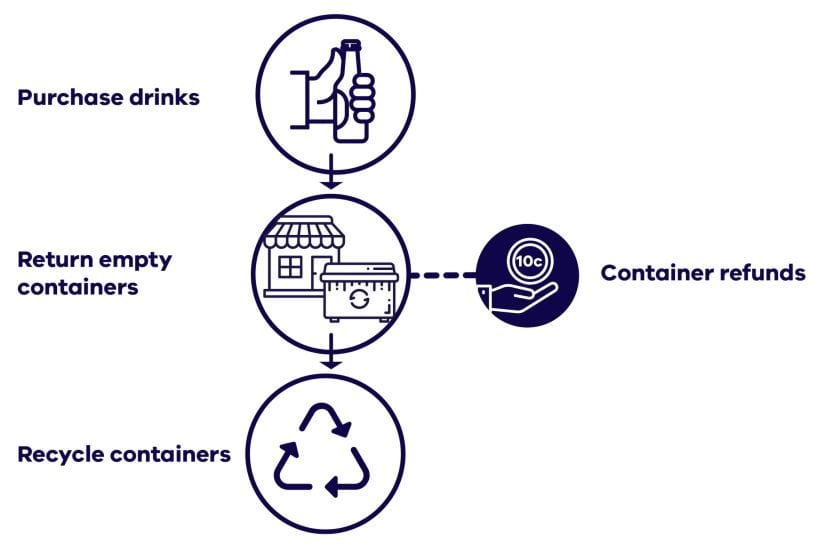
- Participants purchase a drink.
- Participants return their empty drink container to one of over 600 refund points across Victoria.
- Participants receive a 10-cent refund for every suitable eligible container they return. Participants can choose to keep the funds or donate to a participating charity, community group, environmental group, educational organisation, or sports group.
- Returned containers are then given a new lease on life. The material is recycled and remanufactured into a new product, saving it from landfill or littering the environment.
Refund points
There are many convenient and accessible locations across Victoria for participants to return empty drink containers. Community access and service standards ensure that participants can return their drink containers to a refund point that is convenient for them, regardless of where they are in Victoria.
There are a variety of ways to return drink containers, including:
- reverse vending machines
- depots
- over-the-counter collection points
- mobile or ‘pop-up’ refund collection points
Community Operating and Access Standards
We are committed to making Victoria’s Container Deposit Scheme the most accessible and convenient scheme in Australia.
From 1 July 2024, a community operating standard applies to CDS Vic refund points, which requires minimum operating hours. These hours vary according to the location and remoteness of a refund point as classified by Australian Bureau of Statistics geographic standard.
We encourage people to visit the CDS Vic website to check opening hours of their closest refund point before visiting.
From 1 August 2024, a community access standard applies to CDS Vic refund collection points, prescribing minimum sites across Victoria. In metropolitan areas, a minimum of one refund collection point per 14,500 people applies. For regional towns of 750 or more, or remote towns of 300 or more, refund collection points will be located as required within 5 km of the town boundary as specified by the Australian Statistical Geography Standard (ASGS) Edition 3 published by the Australian Bureau of Statistics.
Drink containers
CDS Vic targets drink containers that most commonly contribute to litter and are often consumed away from home. This includes plastic soft drink bottles, glass beer bottles, soft drinks and alcohol sold in cans, and small fruit juice cartons.
A complete list of eligible containers can be found in the Container Deposit Scheme Regulations.
Community support
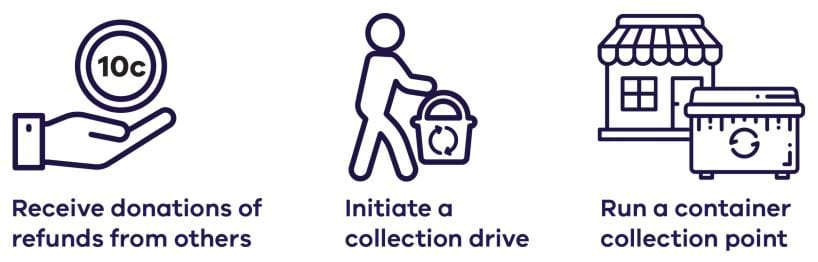
CDS Vic provides charities, community groups, environmental organisations, sports groups, and educational organisations with new and easy ways to raise funds. Their options include:
- receiving donations from the community – Victorians can choose to pocket their refund or donate to a participating charity
- conducting a collection drive – receive containers from the community
- running a refund point as a business.
Updated 4 April 2025
About the VIC Government
- The Premier and ministers
- Find a Vic Gov department, agency or service
- Strategies and policies
- Inquiries and royal commissions
Grants and programs
Jobs and careers
Arts, culture and heritage
Business and the workplace
- Mentally Healthy Workplaces Framework
- Portable Long Service Authority
- Victoria’s racing industry
- Workforce Inspectorate Victoria
- Liquor licensing, sale and supply
Communities
- Children
- First Peoples - State Relations
- Finding records
- Gender equality & women’s leadership
- LGBTIQA+ equality
- Multicultural communities
- Seniors Online
- Veterans support and commemoration
- Volunteering in Victoria
- Youth Central
Education and training
- Victorian Early Childhood Regulatory Authority
- Early childhood education – information for professionals
- Kinder: Best Start, Best Life
- Education – information for parents
- Schools.Vic - information for schools
- Education grants, programs, awards and events
- PROTECT
- TAFE, training and universities sector
- TAFE Victoria
- Victorian Skills Authority
- Apprenticeships Victoria
- Learn Local
Environment, water and energy
Finance and economy
Health and social support
- Family violence reform
- NDIS Worker Screening Check
- NDIS and disability services and support in Victoria
- Patient Review Panel
- Transforming Trauma Victoria
Housing and property
Law and justice
- Adoption
- Births, deaths and marriages
- Honorary justices
- Machete ban
- Safeguarding Victorians against terrorism
- Stolen Generations Reparations Package
- Victims of Crime
- Victorian Racing Tribunal
Safety and emergencies
- Emergency Recovery Victoria
- Victorian Emergency Relief and Recovery Foundation
- Emergency Recovery Resource Portal
- How well do you know fire
- Fire Services Reform
- Water safety
- Marine Search and Rescue
Science and technology
- Data sharing and open data
- Data.vic - discover and access Vic Gov open data
- Developer.Vic - portal for API developers
- Go.vic URL shortener
- Vic Gov IT project dashboard
- Victoria’s free public wi-fi network
- Cyber security in the Victorian Government
Sport and recreation
Traffic and transport
- Cameras Save Lives
- Transport Fines
- Getting Around
- Transport Planning
- Transport Future
- Climate Change and transport
- Future Directions For Transport
- Transport projects
- Ports and Freight
Working in the Victorian Government
- Single Digital Presence home
- Accommodation and Library Services
- Executive employment in the Victorian public sector
- Budget, procurement and funding
- Careers in the Victorian Government
- Council and Regulator Toolkit
- Guidelines for working in government
- Join a government network
- Standards and guidelines
- VicFleet CarPool
- Victorian Government style guide