Using the guides
How to search the guides and apply for records.
On this page
Our guides are here to help you search for your records. Before you begin your search, it’s useful to understand the kind of information found in the guides.
Each agency or institution has a collection guide, but not all of the guides are the same. This is because different institutions created or kept records their own way. Some guides list many records, while others list a few or none.
Each guide:
- has a short history of the agency or institution, if information is available
- groups records by types like ‘client information’ and ‘departmental administration’
- describes what’s in the records, such as ward lists, inspector reports, department correspondence and dates
- may be short or long. Most are one page, but some have many pages and sections.
We understand you may not know or remember a place where you or a family member stayed. If you don’t, the Find and Connect website map may help you. It shows historical institutions across Victoria, with filters like time periods and suburbs/towns to help your search. Once you think you have the right place/s, you can return to our guides to explore the records.
We also have guides that are more general in nature and can be found by searching categories (for example, ‘adoption’).
Using the guides
Step 1: Find a guide
- Go to our searching the guides page
- Then, start searching for a guide. You can do this in two ways:
- If you know the name of the institution, enter it in the Search by keyword field (for example, Larundel Mental Hospital) and then select the Apply search filters button. The institution’s name should appear in the results, even if it is not the first item listed.
- If you’re not sure of the institution’s name, use one or more of the Category, Sub category and Decade fields. Then, select the Apply search filters button. You will get a list of results that match the fields you selected.
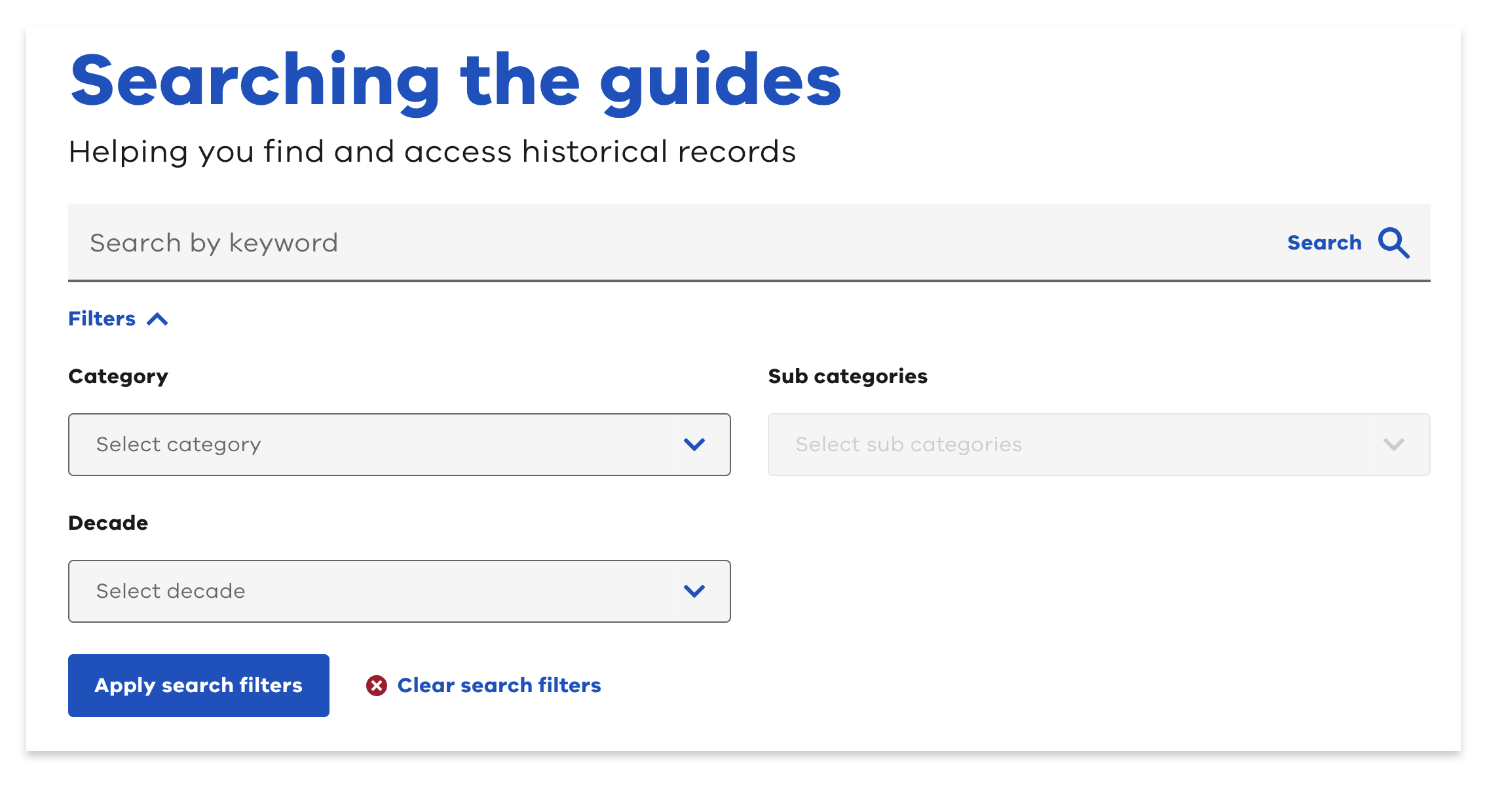
If none of the results look familiar or helpful, try to locate the institution using the Find and Connect website map or using our timeline and history pages for general information. Any information you can remember or find will help archivists search for your records.
Step 2: Explore the guide
a. When you find a relevant guide, select the guide to view general information about the institution and the available records. The guide may show a list of records about the institution and sometimes also records from the institution which are contained in the department’s record collections. For example, the Lutheran Children’s Home (1950 -1976) entry shows both records created by the department about the home as well as records created by the home.
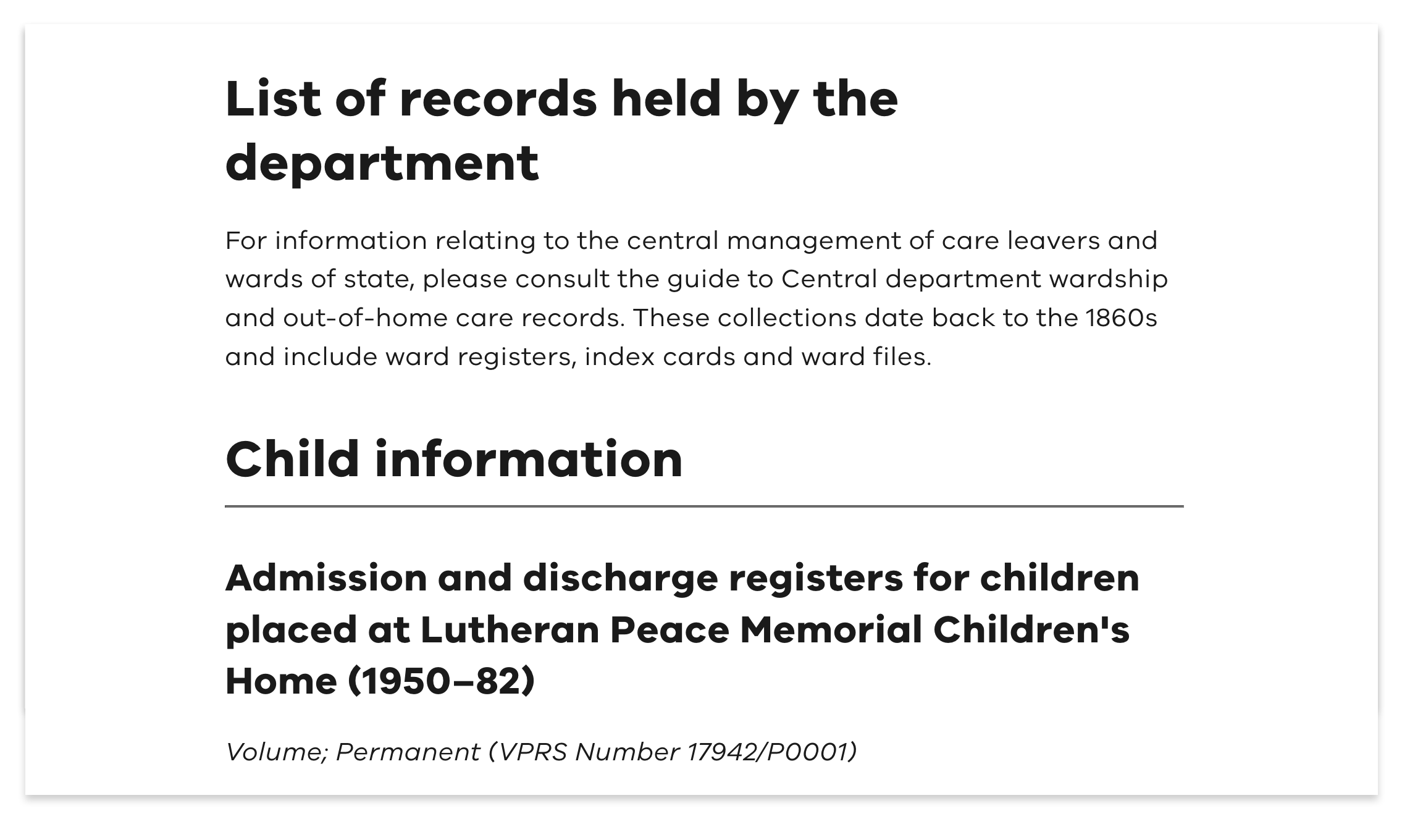
b. If there are multiple types of records, a Collection Guide download will be available at the bottom of the page (such as this example from the Larundel Mental Hospital).
| Description | Date range |
|---|---|
| Patient master index cards | 1951 - 91 |
| Register of patients | 1959 - 86 |
| Female patient admission warrants | 1953 - 65 |
| Male patient admission warrants | 1953 - 65 |
c. Each description outlines the type of information in the record. For example, the Patient master index cards from Larundel Mental Hospital have the following information:
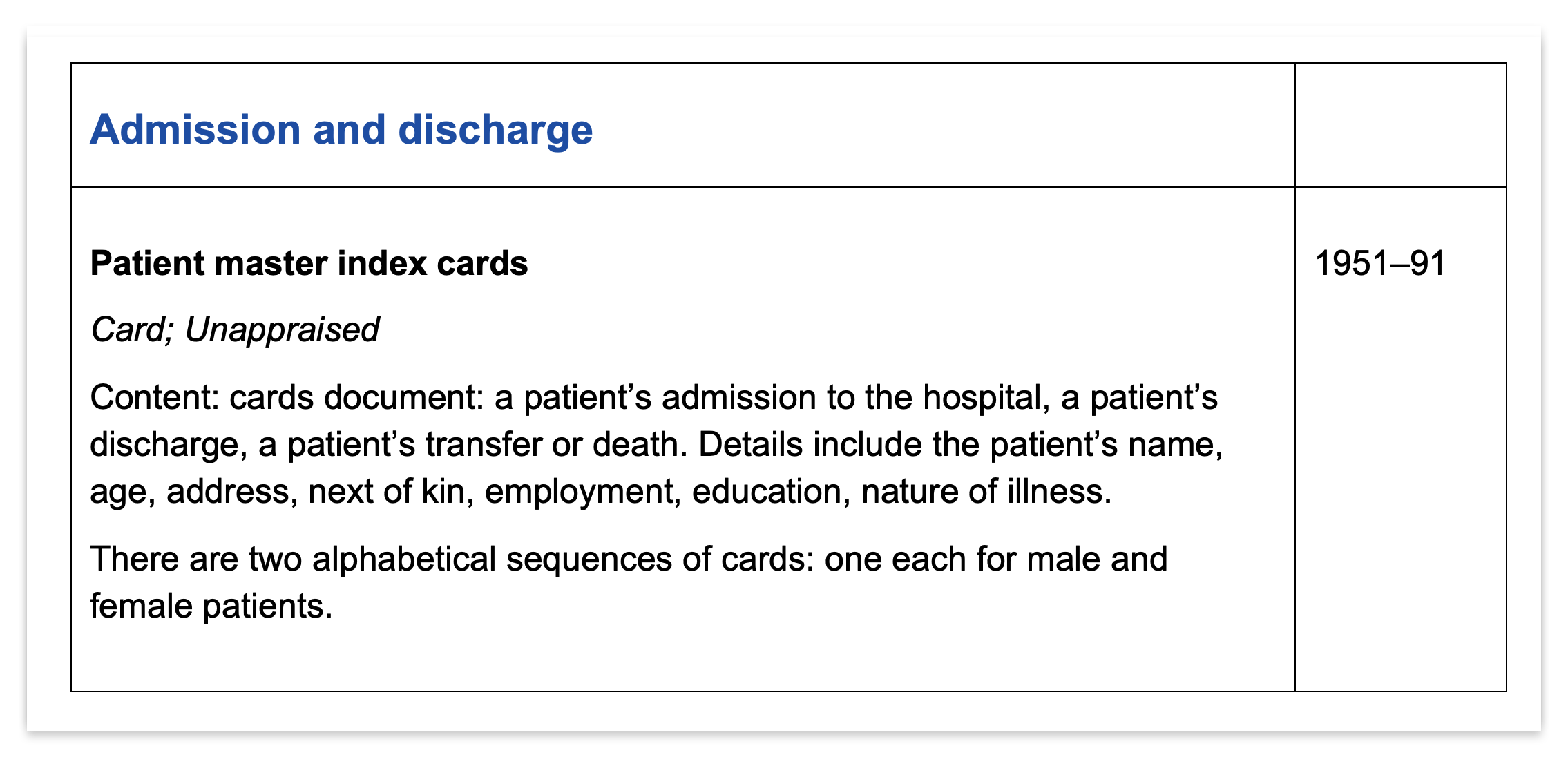
*Important: Any relevant information found in the records should be added to your application to help with your request.
Step 3: Apply for records
1. Make a Freedom of Information (FOI) request
If you find a record or records that may be relevant to you or someone else, the next step is to apply to access them. This is called a Freedom of Information request, or FOI for short. It is the official way to ask for records.
(*Note: Any records before 1920 do not need an FOI request and are available to the public via the Public Record Office Victoria).
2. Who can apply
For privacy reasons, only you or someone you have chosen to act on your behalf can request your records. You won’t be able to see other people’s information, and your own information will also remain confidential.
Important: Anyone applying on behalf of another person (including for a relative who is deceased) will need to complete required documentation and provide proof of their identity and relationship to that person.
3. How to apply
Find the department responsible for the record in the last sentence under the guide’s section titled Warning about distressing information. Then go to our contact us page to find the email details of the responsible department.
In your email to them be sure to include:
- your name, and any other names you might have been known by
- date of birth (if known)
- the institution/s or institution type (eg: orphanage)
- any relevant information you found in the guide
- any other information you may think is helpful about your time in care, such as parents’ and sibling names, places you might have lived, dates.
- a certified copy of photo identification
If you didn’t find anything useful in the guides, don’t worry. You may still email an FOI request by giving your name and date of birth.
Where else to look for records
Over the decades, there have been hundreds of organisations that have offered accommodation and support services to children and young people. Some organisations that are still in operation today have taken responsibility for their predecessors’ historical records and might hold non-government records.
These organisations include:
- Victorian Aboriginal Child Care Agency (VACCA)
- Anglicare
- Berry Street Victoria
- Bethany Family Services (Geelong) - now under Meli
- Child and Family Services Ballarat
- Glastonbury Child & Family Services (Geelong)
- MacKillop Family Services
- Melbourne City Mission
- Oz Child (previously known as Community Connections)
- Salvation Army (includes Salvation Army Eastcare and Salvation Army Westcare)
- UnitingCare Victoria & Tasmania
Updated 10 June 2025
About the VIC Government
- The Premier and ministers
- Find a Vic Gov department, agency or service
- Strategies and policies
- Inquiries and royal commissions
Grants and programs
Jobs and careers
Arts, culture and heritage
Business and the workplace
- Mentally Healthy Workplaces Framework
- Portable Long Service Authority
- Victoria’s racing industry
- Workforce Inspectorate Victoria
- Liquor licensing, sale and supply
Communities
- Children
- First Peoples - State Relations
- Finding records
- Gender equality & women’s leadership
- LGBTIQA+ equality
- Multicultural communities
- Seniors Online
- Veterans support and commemoration
- Volunteering in Victoria
- Youth Central
Education and training
- Victorian Early Childhood Regulatory Authority
- Early childhood education – information for professionals
- Kinder: Best Start, Best Life
- Education – information for parents
- Schools.Vic - information for schools
- Education grants, programs, awards and events
- PROTECT
- TAFE, training and universities sector
- TAFE Victoria
- Victorian Skills Authority
- Apprenticeships Victoria
- Learn Local
Environment, water and energy
Finance and economy
Health and social support
- Family violence reform
- NDIS Worker Screening Check
- NDIS and disability services and support in Victoria
- Patient Review Panel
- Transforming Trauma Victoria
Housing and property
Law and justice
- Adoption
- Births, deaths and marriages
- Honorary justices
- Machete ban
- Safeguarding Victorians against terrorism
- Stolen Generations Reparations Package
- Victims of Crime
- Victorian Racing Tribunal
Safety and emergencies
- Emergency Recovery Victoria
- Victorian Emergency Relief and Recovery Foundation
- Emergency Recovery Resource Portal
- How well do you know fire
- Fire Services Reform
- Water safety
- Marine Search and Rescue
Science and technology
- Data sharing and open data
- Data.vic - discover and access Vic Gov open data
- Developer.Vic - portal for API developers
- Go.vic URL shortener
- Vic Gov IT project dashboard
- Victoria’s free public wi-fi network
- Cyber security in the Victorian Government
Sport and recreation
Traffic and transport
- Cameras Save Lives
- Transport Fines
- Getting Around
- Transport Planning
- Transport Future
- Climate Change and transport
- Future Directions For Transport
- Transport projects
- Ports and Freight
Working in the Victorian Government
- Single Digital Presence home
- Accommodation and Library Services
- Executive employment in the Victorian public sector
- Budget, procurement and funding
- Careers in the Victorian Government
- Council and Regulator Toolkit
- Guidelines for working in government
- Join a government network
- Standards and guidelines
- VicFleet CarPool
- Victorian Government style guide