The evidence behind 2 years and more time in kindergarten
Research tells us that early brain development is very important for children’s learning, development, health and wellbeing. Victoria is expanding Three- and Four-Year-Old Kindergarten. This means children will get 2 years of quality play-based learning programs. These programs are designed and led by teachers and educators. These programs are guided by the Victorian Early Years Learning and Development Framework.
Pre-Prep will be available first for children who will benefit from it the most.
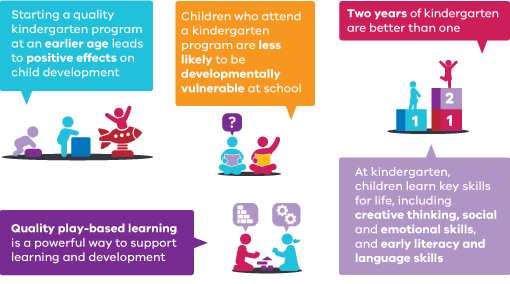
Starting a quality kindergarten program earlier has positive effects on child development. Kindergarten is a safe place for children to build skills, become more independent, and make friends.
Having a longer program in the year before school gives all children more time to learn and grow. It also allows services to build stronger relationships with children and their families.
A 2-year early learning program is supported by evidence from Australia and around the world:
- The first 5 years of life are a period of rapid brain development. By age 5, around 90% of a child’s brain development is done.
- What children experience during these years can make a significant difference to their future cognitive, social and emotional outcomes, including how they manage their feelings and relate to others.
- Children who attend kindergarten for 2 years have better development in language, pre-reading, early number concepts, independence, concentration, and social skills when they start school.
Benefits of 2 years of kindergarten
Many countries provide 2 years and at least 20 hours of kindergarten in the year before school. For example:
- Estonia provides low-cost or free pre-school for all children from age 3 until they start school. The average Estonian 3- to 6-year-old attends 30 hours or more per week in formal early childhood education. This has led to better self-regulation, social emotional skills, literacy, and numeracy. It is linked to smaller gaps in learning and development due to socioeconomic background.
- In Finland, children can access free or low-cost early childhood education with a play-based curriculum and qualified staff. The benefits of attending kindergarten last up to age 15 and beyond.
- In 2010, Ontario in Canada introduced a 30-hour per week program of play-based, teacher-led early learning. More hours increased children’s early literacy, numeracy and self-regulation skills compared to the previous 15-hour per week program.
Read more about the evidence supporting these reforms:
- Two years of early childhood education - what the evidence says (PDF, 1.6 MB)
- Two years of early childhood education - what the evidence says (DOCX, 545 KB)
Early childhood education and care
Updated 27 March 2026
About the VIC Government
- The Premier and ministers
- Find a Vic Gov department, agency or service
- Strategies and policies
- Inquiries and royal commissions
Grants and programs
Jobs and careers
Arts, culture and heritage
Business and the workplace
- Mentally Healthy Workplaces Framework
- Portable Long Service Authority
- Victoria’s racing industry
- Workforce Inspectorate Victoria
- Liquor licensing, sale and supply
Communities
- Children
- First Peoples - State Relations
- Finding records
- Gender equality & women’s leadership
- LGBTIQA+ equality
- Multicultural communities
- Seniors Online
- Veterans support and commemoration
- Volunteering in Victoria
- Youth Central
Education and training
- Victorian Early Childhood Regulatory Authority
- Early childhood education – information for professionals
- Kinder: Best Start, Best Life
- Education – information for parents
- Schools.Vic - information for schools
- Education grants, programs, awards and events
- PROTECT
- TAFE, training and universities sector
- TAFE Victoria
- Victorian Skills Authority
- Apprenticeships Victoria
- Learn Local
Environment, water and energy
Finance and economy
Health and social support
- Family violence reform
- NDIS Worker Screening Check
- NDIS and disability services and support in Victoria
- Patient Review Panel
- Transforming Trauma Victoria
Housing and property
Law and justice
- Adoption
- Births, deaths and marriages
- Honorary justices
- Machete ban
- Safeguarding Victorians against terrorism
- Stolen Generations Reparations Package
- Victims of Crime
- Victorian Racing Tribunal
Safety and emergencies
- Emergency Recovery Victoria
- Victorian Emergency Relief and Recovery Foundation
- Emergency Recovery Resource Portal
- How well do you know fire
- Fire Services Reform
- Water safety
- Marine Search and Rescue
Science and technology
- Data sharing and open data
- Data.vic - discover and access Vic Gov open data
- Developer.Vic - portal for API developers
- Go.vic URL shortener
- Vic Gov IT project dashboard
- Victoria’s free public wi-fi network
- Cyber security in the Victorian Government
Sport and recreation
Traffic and transport
- Cameras Save Lives
- Transport Fines
- Getting Around
- Transport Planning
- Transport Future
- Climate Change and transport
- Future Directions For Transport
- Transport projects
- Ports and Freight
Working in the Victorian Government
- Single Digital Presence home
- Accommodation and Library Services
- Executive employment in the Victorian public sector
- Budget, procurement and funding
- Careers in the Victorian Government
- Council and Regulator Toolkit
- Guidelines for working in government
- Join a government network
- Standards and guidelines
- VicFleet CarPool
- Victorian Government style guide