Early Start Kindergarten
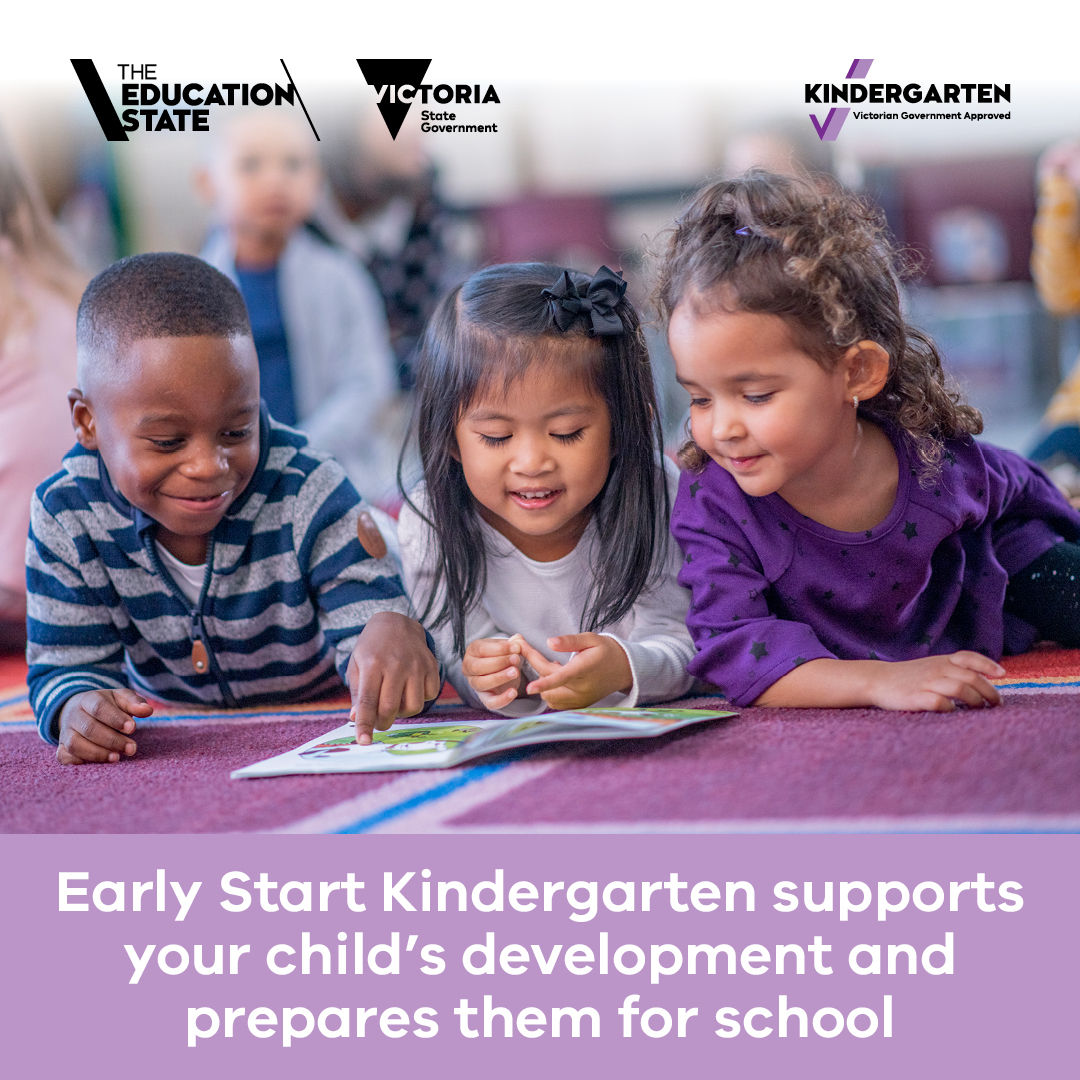
Early Start Kindergarten gives eligible children 15 hours of free or low-cost kindergarten a week for 2 years before starting school.
On this page
- Early Start Kindergarten and Three-Year-Old Kindergarten
- How to apply
- When to apply
- Why Early Start Kindergarten is important
- Quality is important
- Pre-Prep
- Koorie Kids Shine
- Resources
To be eligible, your child must be 3 by 30 April in the year they start kindergarten, and:
- from a refugee or asylum seeker background, or
- are Aboriginal and/or Torres Strait Islander, or
- have had contact with child protection.
Watch the Early Start Kindergarten video on Vimeo.
Early Start Kindergarten and Three-Year-Old Kindergarten
The Victorian Government is continuing to roll out funded kindergarten for all three-year-olds. During the roll-out, there will be no change to Early Start Kindergarten.
Early Start Kindergarten will continue to provide 15 hours of free or low cost kindergarten per week to all eligible children in all areas across Victoria.
Children enrolled in Early Start Kindergarten are also eligible for Pre-Prep (more hours of Four-Year-Old Kindergarten) the following year, no matter where they live in the state.
How to apply
Early Start Kindergarten is available in all kindergarten programs delivered by a qualified teacher. You can enrol your child by contacting a kindergarten near you and asking to access an Early Start Kindergarten grant. You can also contact us or your local council for assistance. Applications for Early Start Kindergarten funding are made by the service on your behalf and the grant is paid directly to the service.
When to apply
Eligible children can access Early Start Kindergarten if they turn 3 before 30 April in the year they are enrolled to attend Three-Year-Old Kindergarten.
You can enrol your child by notifying the kindergarten you wish to attend or your local council of your child’s eligibility for Early Start Kindergarten. Children are eligible for ESK if they turn 3 before 30 April in the year they are enrolled to attend Three-Year-Old kinder.
If your child is born between 1 January and 30 April you can choose which year they start Three-Year-Old Kindergarten. Your child can start Three-Year-Old Kindergarten in the same year they turn 3, or in the year they turn 4 years of age. If your child starts Three-Year-Old Kindergarten in the year they turn 3 they will then start school in the year they turn 5. If you choose to send your child to Three-Year-Old Kindergarten in the year they turn 4, they will start school in the year they turn 6.
For assistance in determining when your child is eligible for Early Start Kindergarten, you can contact us, your local council, your maternal and child health nurse, or a kindergarten in your area.
Why Early Start Kindergarten is important
Early Start Kindergarten can help ensure you get the maximum amount of free kinder program hours possible each week for your child for 2 years.
Accessing high quality early childhood education for 2 years has a substantial and positive impact on a child’s cognitive, emotional, and social skills (Centre for Education Statistics and Evaluation, 2018). Through play-based learning at kindergarten, your child will gain new or improved skills in a number of different areas, including:
- learning how to become an effective learner
- developing and extending their communication and language skills
- building self-confidence and social skills
- building understanding of identity and culture
- learning to be creative through arts, dance and music
- developing skills in literacy and numeracy.
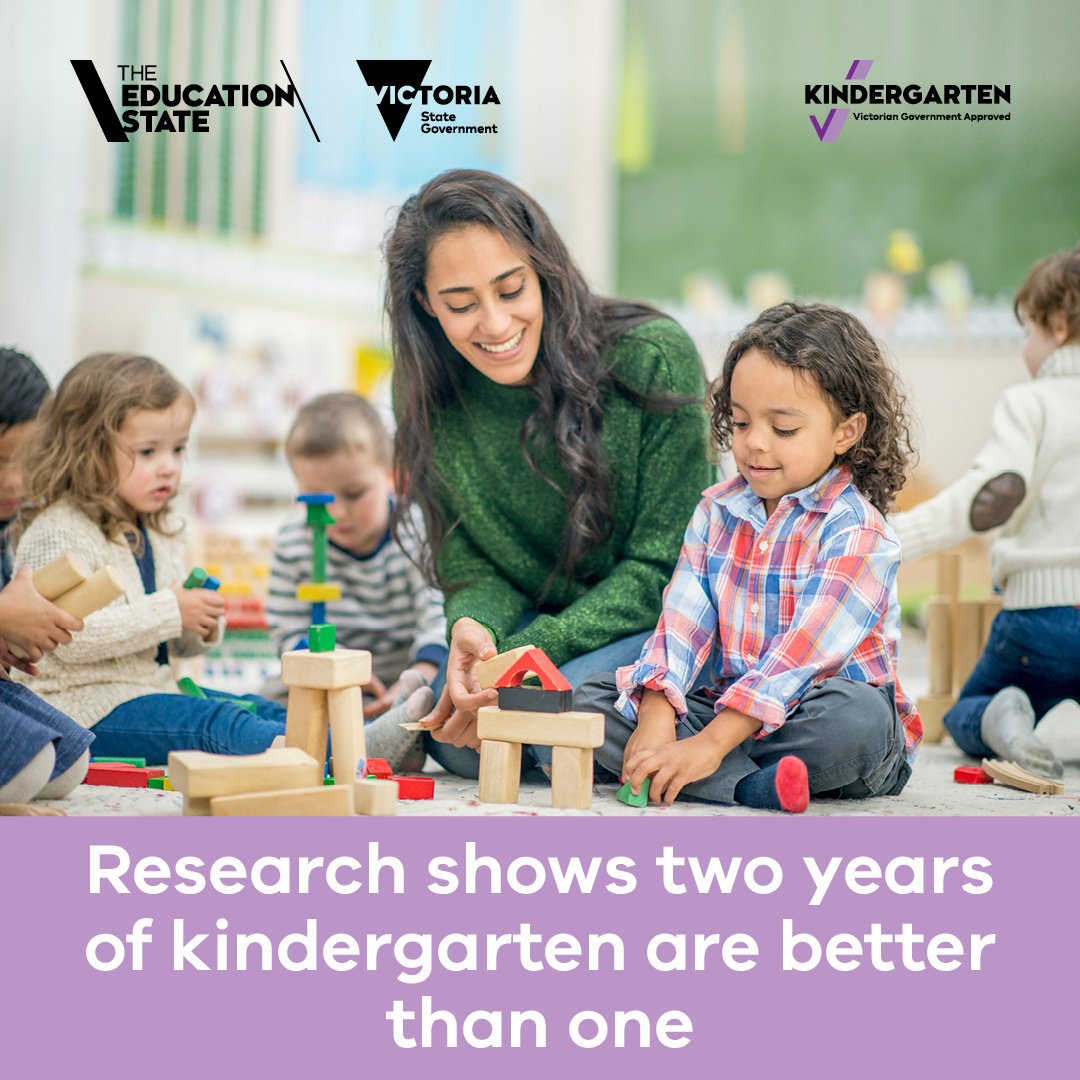
Research shows that 2 years of kindergarten also has a bigger impact on children’s long term development and health compared with one year of kindergarten, which can lead to stronger academic outcomes at school (Fox and Geddes, 2016).
Quality is important
When considering enrolling your child in a kindergarten service, it is important to ask about how the service maintains quality learning programs. Research has found that high-quality kindergarten programs have a significantly strong impact on children’s literacy, academic outcomes and social skills (Sylva et al, 2010).
A kindergarten service’s quality rating can also be viewed at Find children’s education and care.
Pre-Prep
Four-Year-Old Kindergarten is becoming Pre-Prep in Victoria, offering children more hours to learn and socialise through play. Pre-Prep will be delivered through standalone (sessional) kindergartens and long day care centres.
In 2026, 16-25 hours of Pre-Prep will be available statewide for Victorian children:
- who identify as Aboriginal or Torres Strait Islander
- from a refugee or asylum seeker background
- who have had contact with Child Protection
Find out more about how: Four-Year-Old Kindergarten is becoming Pre-Prep.
Koorie Kids Shine
Aboriginal and Torres Strait Islander families can learn about the benefits of kindergarten, including how services create culturally safe places for Koorie children and families, and how to enrol in free or low-cost kindergarten for three-and four-year-old children through Koorie Kids Shine.
Resources
Use these materials to communicate to families in your communities.
- Early Start Kindergarten brochure (PDF, 781KB)
- Early Start Kindergarten postcard (PDF, 4571KB)
- Early Start Kindergarten for refugees and asylum seekers brochure (PDF, 589KB)
- Early Start Kindergarten brochure for refugees and asylum seekers: easy English (PDF, 1779KB)
Translated brochures
Early Start Kindergarten
- Arabic (PDF, 417KB)
- Burmese (PDF, 455KB)
- Chinese (Simplified) (PDF, 55KB)
- Hindi (PDF, 484KB)
- Punjabi (PDF, 410KB)
- Vietnamese (PDF, 443KB)
Early Start Kindergarten for refugees and asylum seekers
- Amharic (PDF, 170KB)
- Arabic (PDF, 169KB)
- Assyrian (PDF, 181KB)
- Burmese (PDF, 169KB)
- Chinese-Simplified (PDF, 356KB)
- Chinese-Traditional (PDF, 386KB)
- Dari (PDF, 168KB)
- Dinka (PDF, 186KB)
- Dzongkha (PDF, 183KB)
- Falam (PDF, 203KB)
- French (PDF, 152KB)
- Hakha (PDF, 146KB)
- Hazaragi (PDF, 171KB)
- Hmong (PDF, 148KB)
- Karen (PDF, 175KB)
- Karenni (PDF, 171KB)
- Khmer (PDF, 182KB)
- Kurdish (PDF, 147KB)
- Nepali (PDF, 170KB)
- Nuer (PDF, 184KB)
- Oromo (PDF, 148KB)
- Pashto (PDF, 170KB)
- Persian (PDF, 166KB)
- Rohingya (PDF, 148KB)
- Sinhalese (PDF, 187KB)
- Somali (PDF, 150KB)
- Swahili (PDF, 147KB)
- Tamil (PDF, 169KB)
- Tigrinya (PDF, 173KB)
- Turkish (PDF, 204KB)
- Urdu (PDF, 172KB)
Social media tiles
- 15 hours of kindergarten – Facebook (JPG, 510KB
- 15 hours of kindergarten – Twitter (JPG, 368KB)
- No child left behind – Facebook (JPG, 730KB)
- No child left behind – Twitter (JPG, 5292KB)
- Why ESK? – Facebook (JPG, 762KB)
- Why ESK? – Twitter (JPG, 541KB)
- Why ESK? (support) - Facebook (JPG, 787KB)
- Why ESK? (support) - Twitter (JPG, 541KB)
Education & trainingParents & carers
Updated 26 March 2026
About the VIC Government
- The Premier and ministers
- Find a Vic Gov department, agency or service
- Strategies and policies
- Inquiries and royal commissions
Grants and programs
Jobs and careers
Arts, culture and heritage
Business and the workplace
- Mentally Healthy Workplaces Framework
- Portable Long Service Authority
- Victoria’s racing industry
- Workforce Inspectorate Victoria
- Liquor licensing, sale and supply
Communities
- Children
- First Peoples - State Relations
- Finding records
- Gender equality & women’s leadership
- LGBTIQA+ equality
- Multicultural communities
- Seniors Online
- Veterans support and commemoration
- Volunteering in Victoria
- Youth Central
Education and training
- Victorian Early Childhood Regulatory Authority
- Early childhood education – information for professionals
- Kinder: Best Start, Best Life
- Education – information for parents
- Schools.Vic - information for schools
- Education grants, programs, awards and events
- PROTECT
- TAFE, training and universities sector
- TAFE Victoria
- Victorian Skills Authority
- Apprenticeships Victoria
- Learn Local
Environment, water and energy
Finance and economy
Health and social support
- Family violence reform
- NDIS Worker Screening Check
- NDIS and disability services and support in Victoria
- Patient Review Panel
- Transforming Trauma Victoria
Housing and property
Law and justice
- Adoption
- Births, deaths and marriages
- Honorary justices
- Machete ban
- Safeguarding Victorians against terrorism
- Stolen Generations Reparations Package
- Victims of Crime
- Victorian Racing Tribunal
Safety and emergencies
- Emergency Recovery Victoria
- Victorian Emergency Relief and Recovery Foundation
- Emergency Recovery Resource Portal
- How well do you know fire
- Fire Services Reform
- Water safety
- Marine Search and Rescue
Science and technology
- Data sharing and open data
- Data.vic - discover and access Vic Gov open data
- Developer.Vic - portal for API developers
- Go.vic URL shortener
- Vic Gov IT project dashboard
- Victoria’s free public wi-fi network
- Cyber security in the Victorian Government
Sport and recreation
Traffic and transport
- Cameras Save Lives
- Transport Fines
- Getting Around
- Transport Planning
- Transport Future
- Climate Change and transport
- Future Directions For Transport
- Transport projects
- Ports and Freight
Working in the Victorian Government
- Single Digital Presence home
- Accommodation and Library Services
- Executive employment in the Victorian public sector
- Budget, procurement and funding
- Careers in the Victorian Government
- Council and Regulator Toolkit
- Guidelines for working in government
- Join a government network
- Standards and guidelines
- VicFleet CarPool
- Victorian Government style guide