Collecting firewood
To keep forests healthy and maintain a sustainable supply of wood, there are some restrictions about where and when you can collect firewood in State forests. These rules are outlined below.
What are the rules?
Open all
- Where you can collect
You can only collect firewood from designated collection areas in State forests during the autumn and spring domestic firewood collection seasons.
Before heading out, find your nearest collection area online via the Forest Fire Management Victoria websiteor ask for a current firewood collection area map from your nearest DEECA office. When you’re in the forest, look for the ‘Domestic Firewood Collection Area’ signposts.
Please note, that firewood collection in some areas is restricted to Local Government Area residents only.
Other areas:
- Firewood collection from roadsides is generally prohibited but may be allowed with a permit on select local government roads.
- Parks Victoria does not allow firewood collection in the protected areas they manage, including national, state, regional and metropolitan parks. Note: It is always illegal to cut down standing trees without express permission.
- When you can collect
You can collect firewood during the two collection seasons:
- Autumn season: 1 March to 30 June
- Spring season: 1 September to 30 November These periods are chosen to avoid collection during summer when fire danger is high and winter when roads and tracks are most likely to be damaged.
Collection seasons are also subject to local conditions and areas may be closed at short notice. Check online via the Forest Fire Management Victoria website for updates.
- What you can collect
In designated firewood collection areas, you can collect wood from trees and branches that:
- are already on the ground,
- are further than 20 metres from a waterway or waterhole (like a bog or dam),
- are not visibly hollow, and
- do not have moss or fungi growing on them. It is illegal to chop down trees or branches if they’re still standing, whether they are dead or alive.
These rules protect habitat for our wildlife and protect forest health.
- How much you can collect
You can collect two cubic metres of firewood per person per day. The limit for each household is 16 cubic metres per financial year.
A single cubic metre of split firewood will fit into a standard trailer of about 1.8 metres by 1.2 metres if it’s neatly stacked to a height of 50cm.
Some households in regional areas rely on firewood for winter energy. Financial assistance is available for people on low incomes who need to buy firewood. For more information visit the Forest Fire Management Victoria website.
- Collecting for someone else
You can nominate someone to collect firewood on your behalf.
You’ll need to print out and complete a nomination form and give it to the person who will be collecting your firewood. Nominated persons must carry the form with them when collecting their firewood. The nomination form is available at the link below.
Firewood Collection Nomination Form Word 67.4 KB (opens in a new window)
- Vehicles and trailers
You can use a vehicle when collecting firewood, but please remember:
- You must follow all public land vehicle use rules, e.g. driving only on formed roads or established tracks. This means you may need to park on the side of the road, then carry the firewood to your car by hand or using a wheelbarrow.
- You’re not allowed to tow or winch fallen trees along the ground, as this damages the land. You cannot bring in or use heavy vehicles with a gross vehicle mass of more than 4.5 tonnes which you would need a heavy vehicle licence to operate.
- Chainsaws and equipment
When collecting, you can use small equipment, like a chainsaw, axe, or handsaw.
You can’t use heavy machinery, including a bulldozer, crane, excavator, forwarder, hydraulic log splitter, saw bench, skidder, skid steer loader, or a tractor.
To protect yourself and the environment:
- Never use a chainsaw during a declared Total Fire Ban.
- Make sure your chainsaw is fitted with a proper exhaust and spark arrester.
- Only refill chainsaw oil or fuel on a hard surface where liquid can’t leach into the forest soil. Always use necessary safety equipment: chaps, gloves, boots, eye and ear protection.
- Selling firewood
In Victoria, you can only use firewood collected from State forest for personal use, such as at home or for camping. You can’t sell it to someone else. This is to make sure everyone gets a fair share, and people aren’t using a community resource for personal gain.
- Report suspicious behaviour
Have you heard chainsaws at night? Or seen vehicles and trailers coming in and out of the forest loaded up with firewood outside of collection seasons?
If you think someone might be selling firewood illegally, or illegally cutting and removing timber from public land you can make an anonymous report by calling us on 136 186.
- Compliance and enforcement
Authorised Officers regularly patrol State forests targeting illegal firewood theft and run dedicated enforcement operations with other public land authorities. Authorised Officers can issue on-the-spot fines or pursue court proceedings.
- Help dealing with energy costs
The Victorian Government provides financial support and energy efficiency programs to help people with the cost of energy. To read about the different programs available and check your eligibility, visit the Energy concession and support page.
To collect firewood legally, make sure you know what you’re looking for before you head out.
-

-

-
.jpg?width=1536)
-

-
-

-
### Look out for these signs
These signs will be present in legal Domestic Firewood Collection Areas during Firewood Collection Seasons
View ‘Look out for these signs’ fullscreen
- ### Know your trailer size
A single cubic metre of split firewood will fit into a standard trailer of about 1.8m by 1.2m. Make sure you’re not overfilling your trailer to stay under the two cubic metre limit.
View ‘Know your trailer size’ fullscreen
- .jpg?width=1536)### Don’t take too much If you overfill your trailer and take more than 2 cubic metres of firewood, you can be fined or taken to court.
View ‘Don’t take too much’ fullscreen
- ### Stay away from wood with fungi, moss or hollows
You’re not allowed to take wood that is visibly hollow or has moss or fungi growing on it.
View ‘Stay away from wood with fungi, moss or hollows’ fullscreen
- ### Be aware of the harm
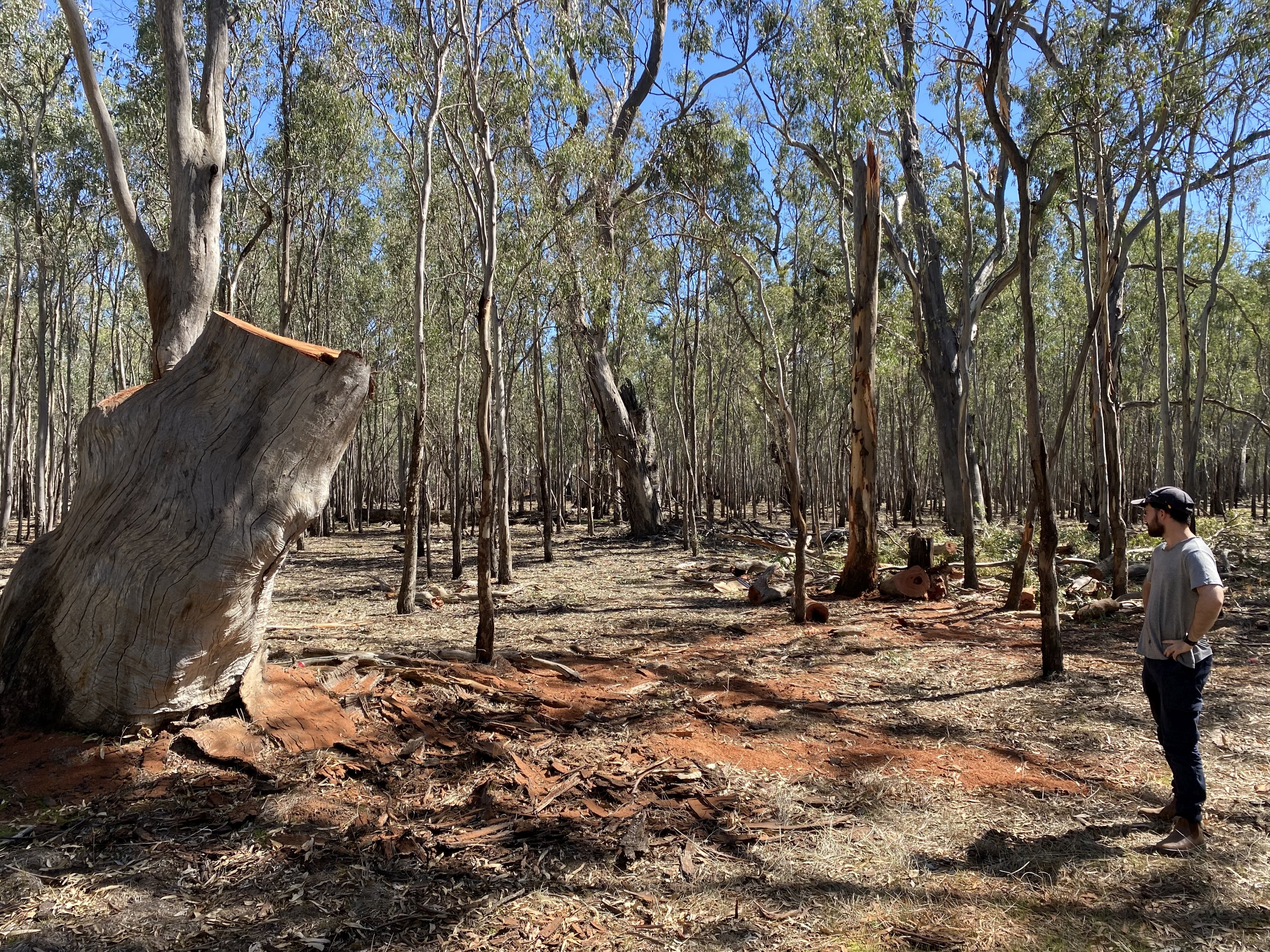
Felling trees is illegal and does great harm, removing critical habitat for native species.
View ‘Be aware of the harm’ fullscreen
- ### Report suspicious behaviour
If you see evidence of illegal behaviour, report it to the Conservation Regulator on 136 186.
View ‘Report suspicious behaviour’ fullscreen
Updated 18 August 2025
Related links
About the VIC Government
- The Premier and ministers
- Find a Vic Gov department, agency or service
- Strategies and policies
- Inquiries and royal commissions
Grants and programs
Jobs and careers
Arts, culture and heritage
Business and the workplace
- Mentally Healthy Workplaces Framework
- Portable Long Service Authority
- Victoria’s racing industry
- Workforce Inspectorate Victoria
- Liquor licensing, sale and supply
Communities
- Children
- First Peoples - State Relations
- Finding records
- Gender equality & women’s leadership
- LGBTIQA+ equality
- Multicultural communities
- Seniors Online
- Veterans support and commemoration
- Volunteering in Victoria
- Youth Central
Education and training
- Victorian Early Childhood Regulatory Authority
- Early childhood education – information for professionals
- Kinder: Best Start, Best Life
- Education – information for parents
- Schools.Vic - information for schools
- Education grants, programs, awards and events
- PROTECT
- TAFE, training and universities sector
- TAFE Victoria
- Victorian Skills Authority
- Apprenticeships Victoria
- Learn Local
Environment, water and energy
Finance and economy
Health and social support
- Family violence reform
- NDIS Worker Screening Check
- NDIS and disability services and support in Victoria
- Patient Review Panel
- Transforming Trauma Victoria
Housing and property
Law and justice
- Adoption
- Births, deaths and marriages
- Honorary justices
- Machete ban
- Safeguarding Victorians against terrorism
- Stolen Generations Reparations Package
- Victims of Crime
- Victorian Racing Tribunal
Safety and emergencies
- Emergency Recovery Victoria
- Victorian Emergency Relief and Recovery Foundation
- Emergency Recovery Resource Portal
- How well do you know fire
- Fire Services Reform
- Water safety
- Marine Search and Rescue
Science and technology
- Data sharing and open data
- Data.vic - discover and access Vic Gov open data
- Developer.Vic - portal for API developers
- Go.vic URL shortener
- Vic Gov IT project dashboard
- Victoria’s free public wi-fi network
- Cyber security in the Victorian Government
Sport and recreation
Traffic and transport
- Cameras Save Lives
- Transport Fines
- Getting Around
- Transport Planning
- Transport Future
- Climate Change and transport
- Future Directions For Transport
- Transport projects
- Ports and Freight
Working in the Victorian Government
- Single Digital Presence home
- Accommodation and Library Services
- Executive employment in the Victorian public sector
- Budget, procurement and funding
- Careers in the Victorian Government
- Council and Regulator Toolkit
- Guidelines for working in government
- Join a government network
- Standards and guidelines
- VicFleet CarPool
- Victorian Government style guide