Chapter 3: Capability
On this page
- Highlights from 2023-24
- The MARAM Adults Using Family Violence training package
- Capability examples from the annual survey
- Plans for 2024-25
Strategic priority 3: Build workforce and staff capability
MARAM’s long-term success depends on building workforce capability.
This means training practitioners in their MARAM and information sharing responsibilities.
In 2023–24, we prioritised training and other capability-building activities across government.
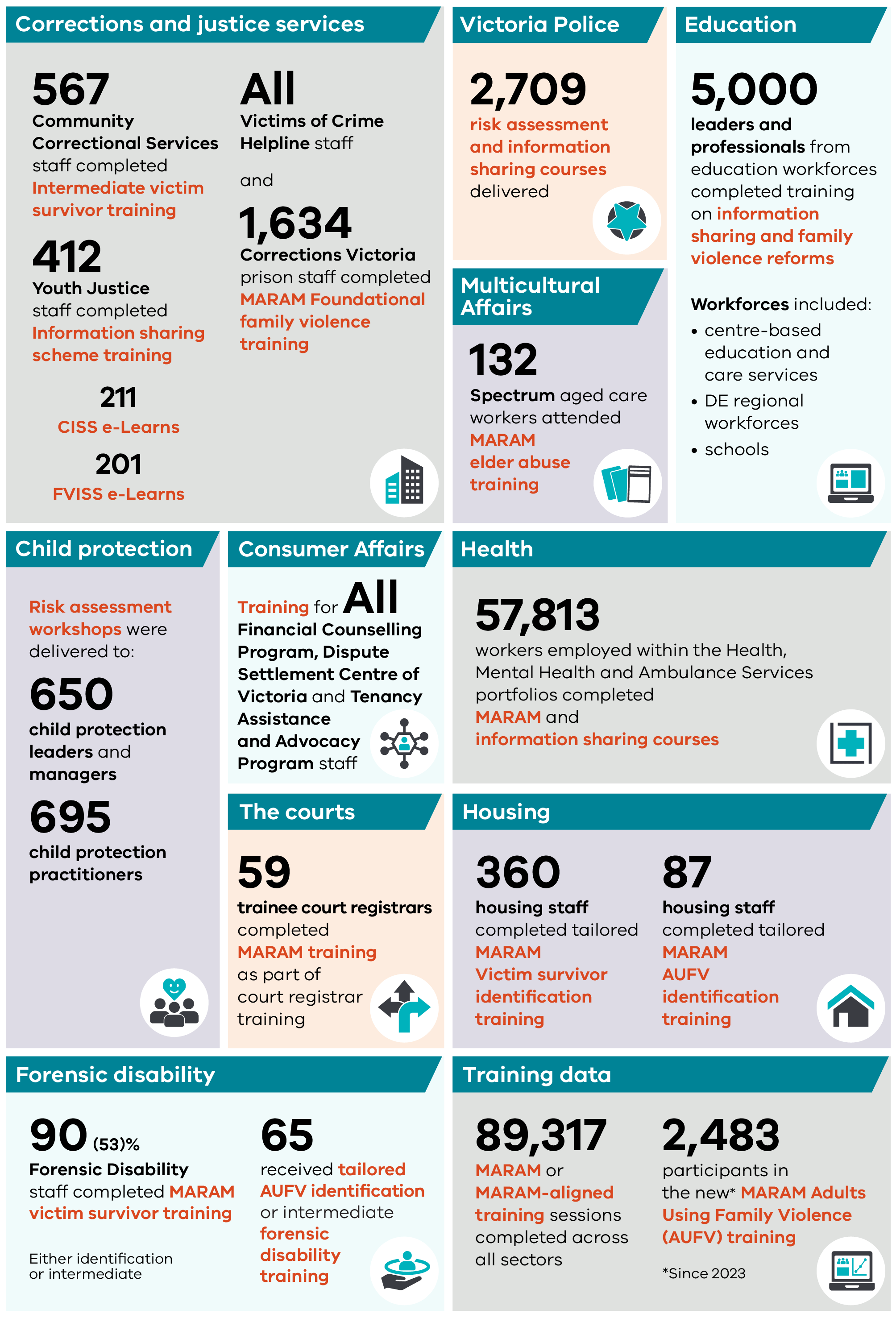
Figure 6 provides a summary of completed training.
Highlights from 2023-24
-
FSV developed a new, non-accredited Adults Using Family Violence training program and practice guides. FSV piloted these with practitioners in the health, justice, police, child protection and mental health workforces. Aboriginal Community-Controlled Organisations (ACCOs) helped to ensure the program’s cultural safety. Delivery of the training program commenced in November 2023.
-
The Education portfolio delivered Respectful Relationships professional learning to 519 early childhood educators. In total, 5,043 educators have attended the professional learning since it began in 2018. More than 1,950 government, Catholic and independent schools in Victoria use the Respectful Relationships whole-school approach.
-
In Housing, Homes Victoria worked with the Council to Homeless Persons (CHP) to deliver information sessions and training. These sessions aimed to build the workforce’s understanding of MARAM. CHP convened a group of MARAM leaders across the homelessness sector. The group met 6 times to provide feedback about the MARAM tools.
-
The Housing portfolio also developed tailored Adults Using Family Violence identification and intermediate training for Forensic Disability Services Staff. This workforce supports people with cognitive disability who are involved in the criminal justice system. Public housing staff also received targeted MARAM Adults Using Family Violence identification training.
-
The Health portfolio promoted eLearn’s for elder abuse and financial abuse for organisations in the health sector.
-
The Youth justice sector provided MARAM intermediate victim survivor training for all custody staff (53) and 170 community-based staff. Of these, 87% rated the quality of the training as very high or high. Participants (94%) agreed or strongly agreed that they were more confident in their ability to engage effectively with those accessing services.
| Project spotlight: Victoria Police trainingImmersive simulation training gives recruits the confidence to put their theoretical knowledge of family violence response into practice.The training uses actors in 3 scenarios. This includes a scenario where recruits respond to and manage risk factors relevant to the accurate identification of the predominant aggressor.This supports recruits to identify family violence risk factors. It gives them the chance to assess and manage risk. It also allows them to practise trauma-aware approaches to support victim survivors.In 2023–24, 994 recruits completed the immersive, simulated learning program. |
|---|
| Case study: MARAM training in the health sectorA specialist family violence practitioner was working with a client who is an adult using family violence.The client appeared to present a very serious risk. They had several intervention orders against them and no access to their children.The practitioner knew this information. However, they had developed a rapport with the client. Over time, they started to believe the client’s version of events that they had not been violent.After attending the full-day MARAM training on resisting collusion and motivating change, the practitioner realised they had been colluding with this client.The term ‘collusion’ refers to ways that an individual, agency or system might reinforce, excuse, minimise or deny a perpetrator’s violence or the extent of that violence.Using tools from the training, the practitioner changed the way they engaged with the client.They used a balanced approach to support the client’s self-reflection about the impacts of their behaviour.The practitioner now notices the invitations for collusion. They feel more confident in how to respond.They have started collaborating and sharing information with other services. This helps to keep the client using violence in view and accountable. It also supports the victim survivor’s safety. |
|---|
The MARAM Adults Using Family Violence training package
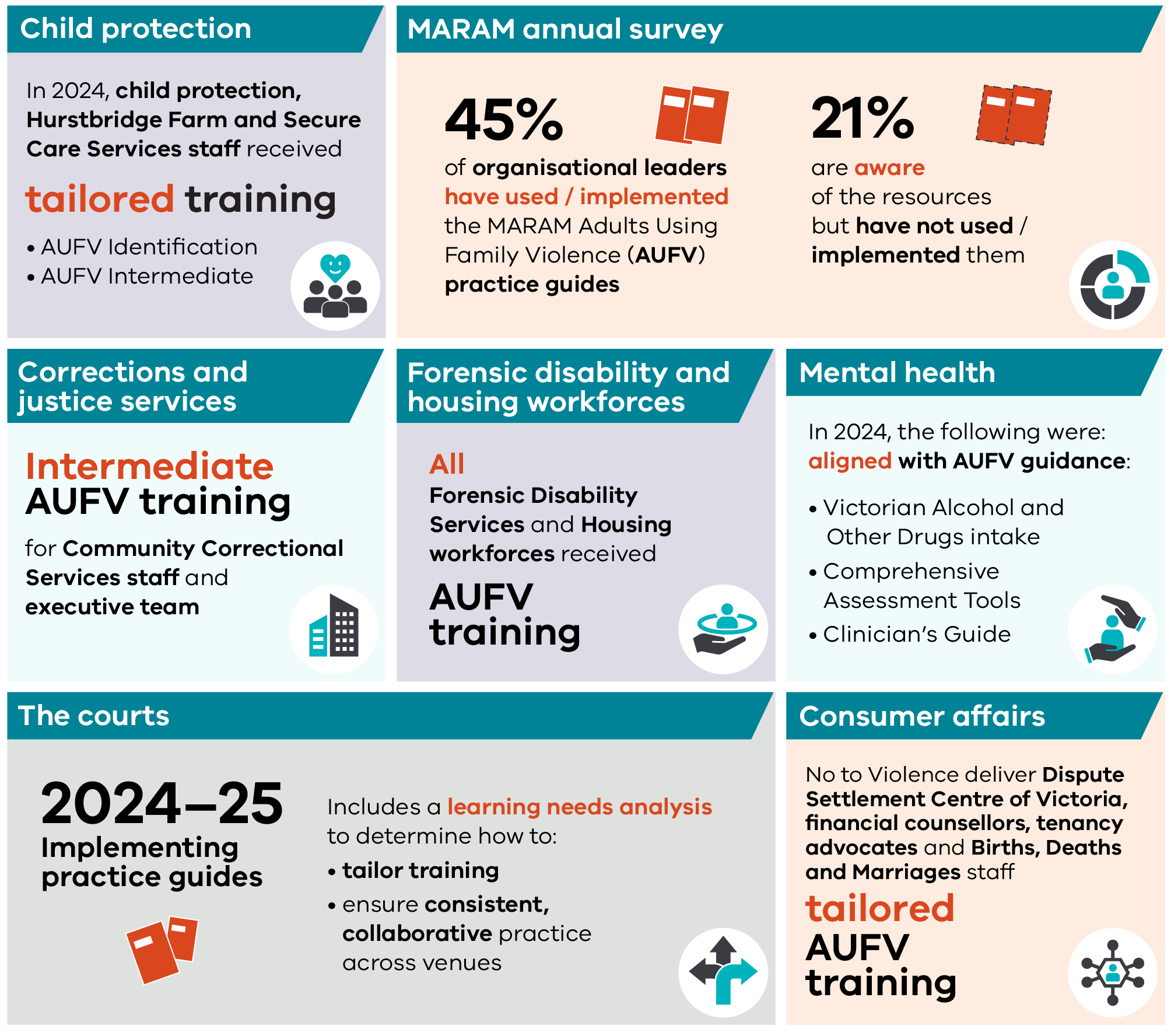
The Adults Using Family Violence training package commenced in November 2023.
It complements the Adults Using Family Violence practice guides released in February 2022.
The above case study demonstrates the importance of training to support practitioners working with adults using family violence.
Figure 5 shows how some portfolios are rolling out the tools.
Figure 5: Using the Adults Using Family Violence practice guides and training package
Capability examples from the annual survey
The survey showed that 78% of respondents who were professional, and frontline staff had undertaken training on various MARAM topics in 2023–24.
Of these, 76% rated the training highly useful or somewhat useful.
For organisational leaders or executives, 95% indicated that they or staff in their organisation completed training in 2023–24.
Of these, 83% rated the training highly useful or somewhat useful**.** Appendix 7 provides more detail.
| Satisfaction with trainingIn 2023–24, workers’ satisfaction with training was 99%. This exceeded the budget performance measure target of 90%.The higher satisfaction level shows that participants value and enjoy facilitated training sessions. |
|---|
Figure 6: MARAM training in 2023-24
| Housing staff feedback about MARAM e-Learn training‘I found it helped to consolidate and explain things I had not quite got before.’‘This put the Child Information Sharing Scheme and Family Violence Information Sharing Scheme into clear perspective.’‘My understanding of [working with] children and youth is vague as I’ve mostly worked with adults. It was helpful doing case studies that involved children.’‘I really liked the video about legal responsibility and duty of care. It was very clear and simple to understand.’ |
|---|
Plans for 2024-25
Child protection will make MARAM training mandatory in all staff professional development plans in 2024–25.
In the Education portfolio, the department will deliver training on the workforce’s MARAM responsibilities. It will also update the e-Learns on information sharing and family violence reform. This includes developing a refresher course.
The courts will tailor MARAM Adults Using Family Violence training to ensure it is appropriate for court operations. This will also assist practitioners to undertake brief interventions with respondents in family violence intervention order matters.
The Prevention of Family Violence portfolio will:
- roll out the MARAM Child and Young Person practice guides to all The Orange Door sites. Induction training will include these new guides
- update minimum standards for men’s behaviour change programs. This includes men’s referral services.
Updated 14 March 2025
MARAM Consolidated Annual Report 2023-24pdf3.9 MB
About the VIC Government
- The Premier and ministers
- Find a Vic Gov department, agency or service
- Strategies and policies
- Inquiries and royal commissions
Grants and programs
Jobs and careers
Arts, culture and heritage
Business and the workplace
- Mentally Healthy Workplaces Framework
- Portable Long Service Authority
- Victoria’s racing industry
- Workforce Inspectorate Victoria
- Liquor licensing, sale and supply
Communities
- Children
- First Peoples - State Relations
- Finding records
- Gender equality & women’s leadership
- LGBTIQA+ equality
- Multicultural communities
- Seniors Online
- Veterans support and commemoration
- Volunteering in Victoria
- Youth Central
Education and training
- Victorian Early Childhood Regulatory Authority
- Early childhood education – information for professionals
- Kinder: Best Start, Best Life
- Education – information for parents
- Schools.Vic - information for schools
- Education grants, programs, awards and events
- PROTECT
- TAFE, training and universities sector
- TAFE Victoria
- Victorian Skills Authority
- Apprenticeships Victoria
- Learn Local
Environment, water and energy
Finance and economy
Health and social support
- Family violence reform
- NDIS Worker Screening Check
- NDIS and disability services and support in Victoria
- Patient Review Panel
- Transforming Trauma Victoria
Housing and property
Law and justice
- Adoption
- Births, deaths and marriages
- Honorary justices
- Machete ban
- Safeguarding Victorians against terrorism
- Stolen Generations Reparations Package
- Victims of Crime
- Victorian Racing Tribunal
Safety and emergencies
- Emergency Recovery Victoria
- Victorian Emergency Relief and Recovery Foundation
- Emergency Recovery Resource Portal
- How well do you know fire
- Fire Services Reform
- Water safety
- Marine Search and Rescue
Science and technology
- Data sharing and open data
- Data.vic - discover and access Vic Gov open data
- Developer.Vic - portal for API developers
- Go.vic URL shortener
- Vic Gov IT project dashboard
- Victoria’s free public wi-fi network
- Cyber security in the Victorian Government
Sport and recreation
Traffic and transport
- Cameras Save Lives
- Transport Fines
- Getting Around
- Transport Planning
- Transport Future
- Climate Change and transport
- Future Directions For Transport
- Transport projects
- Ports and Freight
Working in the Victorian Government
- Single Digital Presence home
- Accommodation and Library Services
- Executive employment in the Victorian public sector
- Budget, procurement and funding
- Careers in the Victorian Government
- Council and Regulator Toolkit
- Guidelines for working in government
- Join a government network
- Standards and guidelines
- VicFleet CarPool
- Victorian Government style guide